
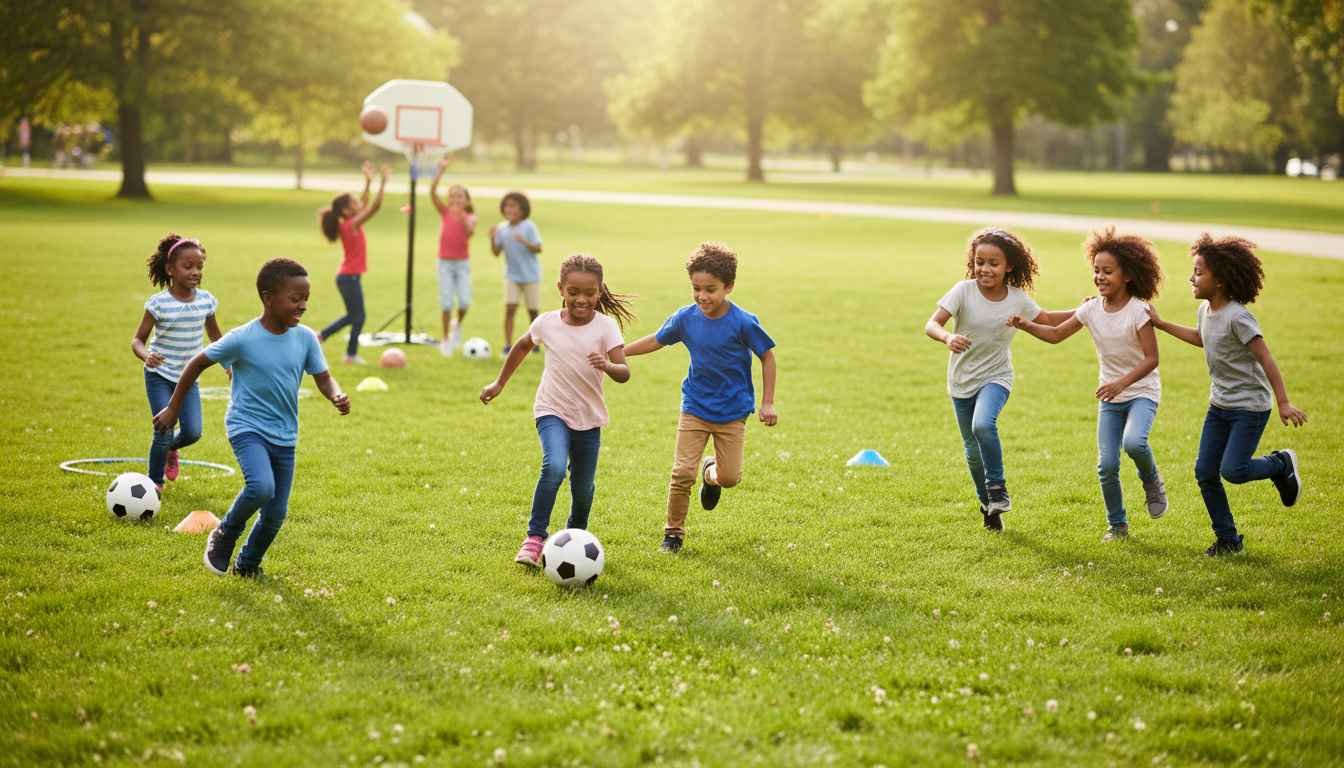

Imagine waking up tomorrow and seeing your kids excited, eager to jump into the day with boundless energy. What if they could channel that energy into fun sports games, making the most of their time with friends and family while staying active and engaged? Today, we’re diving into a collection of thrilling and creative sports games that will keep kids active, entertained, and developing new skills.
In a world where kids are often glued to screens, it’s more important than ever to introduce them to physical games that promote teamwork, exercise, and healthy competition. These fun sports games for kids aren’t just about the physical activity – they also help develop important social and cognitive skills, making them a well-rounded way to play.
Sports Betting Online » Sports News, Betting Promos & Picks
1. Kickball: The Ultimate Playground Game
Kickball is a classic game that never fails to bring joy to kids of all ages. Played on a grass field or any open space, it’s the perfect blend of baseball and soccer. The rules are simple, the equipment is minimal, and the fun is endless.
Here’s how it works: Players are divided into two teams, one to kick and one to field. The pitcher rolls the ball toward the kicker, who kicks it into the field, trying to run around the bases without getting tagged out. It’s an excellent choice for kids because it promotes running, coordination, and teamwork.
Skills Developed:
- Hand-eye coordination
- Teamwork
- Speed and agility
2. Capture the Flag: A Race Against Time
This exhilarating game is ideal for large groups, encouraging kids to strategize and work as a team. The goal is simple: steal the opponent’s flag while protecting your own. It combines running, problem-solving, and collaboration, making it an engaging and dynamic game.
To play, divide kids into two teams. Each team must defend their flag, hidden somewhere on the field, while trying to retrieve the other team’s flag. If you’re tagged by an opponent while crossing the field, you’re sent to “jail” until a teammate rescues you. This game is perfect for kids who love running and strategizing.
Skills Developed:
- Strategy and planning
- Speed and endurance
- Teamwork
3. Dodgeball: The Fast-Paced Game of Skill and Reflex
While it may sound intense, dodgeball is a game that’s easily adapted for kids. With the use of soft balls and clear boundaries, it’s a fantastic way to teach kids how to think quickly, dodge, and work in teams. It also helps develop reflexes and motor skills.
In dodgeball, two teams try to eliminate each other by throwing soft balls at opponents, with the aim of hitting them without them catching the ball. Once a player is hit or caught, they’re out. The game continues until one team remains standing. Kids love the fast pace and the chance to show off their agility and quick thinking.
Skills Developed:
- Reflexes
- Team strategy
- Hand-eye coordination
4. Relay Races: A Classic Challenge for Teams
Relay races are fantastic for groups, encouraging kids to push their limits while working as a unit. Whether you’re using batons or just tagging teammates, relay races test speed, coordination, and teamwork.
To play, divide the group into teams. Each runner must run a set distance, hand off the baton or tag the next runner, and keep the race going until the final player crosses the finish line. The team with the fastest combined time wins.
Skills Developed:
- Speed and agility
- Team coordination
- Motivation and perseverance
5. Soccer: The Global Favorite
Soccer is a universally loved game and for good reason. It requires little more than a ball and an open field, making it easy to organize and play. Whether you’re playing a full-fledged match or just a casual kick-around, soccer is great for improving balance, coordination, and cardiovascular health.
The rules are simple: two teams compete to score goals by kicking the ball into the opposing team’s net. While soccer requires basic skills like dribbling and passing, the game also fosters collaboration, making it ideal for both recreational play and organized sports leagues for kids.
Skills Developed:
- Foot-eye coordination
- Endurance and cardiovascular fitness
- Teamwork and communication
6. T-ball: An Easy Introduction to Baseball
For younger kids who aren’t quite ready for full-on baseball, T-ball is a fantastic option. It simplifies the game by eliminating the need for a pitcher – kids hit the ball off a stationary tee, making it easier for them to make contact. This promotes confidence and a love for the game early on.
T-ball is a gentle introduction to baseball that teaches kids how to hold a bat, how to hit, and the basics of running the bases. It’s also a great game for practicing motor skills and concentration.
Skills Developed:
- Hand-eye coordination
- Motor skills
- Base running basics
7. Basketball: Fun and Fast-Paced for Young Hoopers
Basketball is a high-energy sport that’s excellent for building teamwork and physical fitness. Whether playing a casual game of HORSE or a full-on 5v5, kids love the thrill of making baskets, dribbling, and working with teammates to win.
The key is adapting the game for younger players – using a lower hoop and a softer ball. It teaches kids coordination, spatial awareness, and teamwork, all while getting their heart rate up.
Skills Developed:
- Hand-eye coordination
- Teamwork
- Agility and reflexes
FAQ
What are the benefits of sports games for kids?
Sports games help kids develop essential physical, social, and mental skills. They promote physical fitness, teamwork, and decision-making, while also offering a fun way to stay active.
What age is appropriate for these sports games?
Most of the sports games mentioned can be adapted for different age groups. For younger children, it’s best to simplify the rules and use soft, safe equipment. As kids grow older, you can increase the complexity of the game.
Can these games be played indoors?
Many of these games can be played indoors with adjustments. For example, use soft balls for dodgeball, or smaller spaces for soccer or basketball. It’s all about being creative with your environment.
Who should avoid this?
Sports games should be avoided by kids who have physical limitations or injuries that could worsen with activity. Always ensure that children are properly warmed up and have the appropriate equipment to prevent injuries.