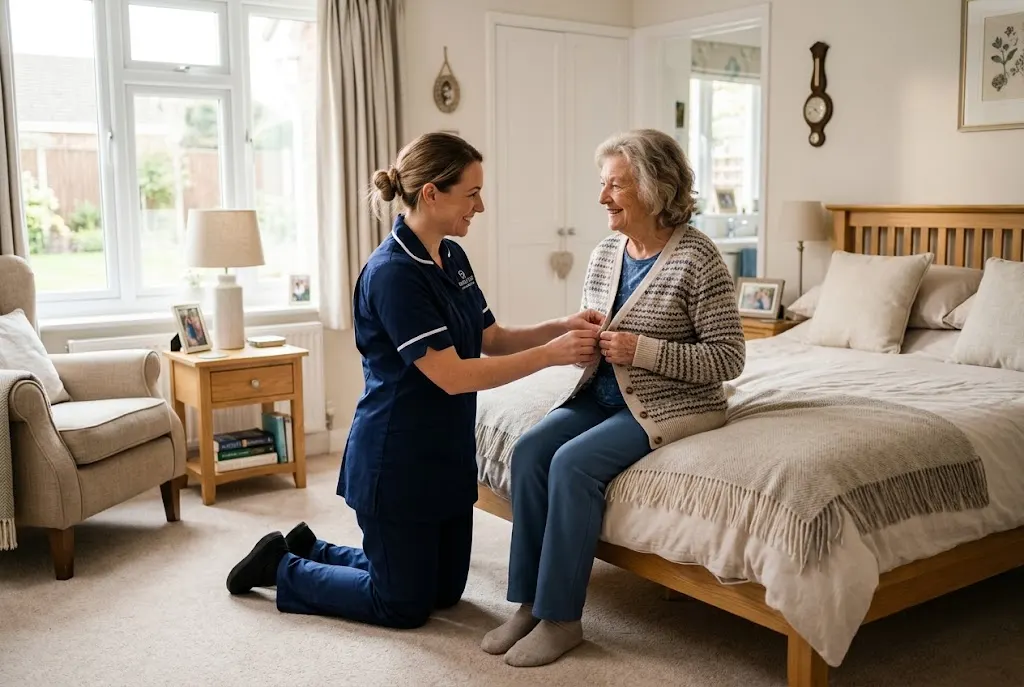

Personal care at home can make everyday life easier for people who need support with washing, dressing, using the toilet, getting out of bed or managing other essential routines. Rather than moving into residential care, many people can receive personal care at home while continuing to live in familiar surroundings. The level of support can vary according to individual needs, preferences and circumstances.
Understanding what personal care means is an important first step when arranging support for yourself, an older relative or someone living with a disability. Personal care can also work alongside companionship and other home-based services, creating a flexible care arrangement that focuses on independence, dignity and quality of life.
What Is Personal Care?
So, what is personal care? In simple terms, personal care refers to practical assistance with essential everyday activities that a person may find difficult to complete independently.
The NHS guidance on help at home explains that paid carers can support people with activities such as washing, dressing, using the toilet, getting out of bed and preparing meals. This means personal care is not simply about completing household tasks. It focuses on helping a person manage their own daily care safely and with dignity.
The exact personal care meaning can differ from one person to another. Someone may only need a small amount of assistance in the morning, while another person may require several visits throughout the day.
Personal Care Meaning and What It Usually Includes
The definition of personal care generally centres on activities connected with a person’s daily hygiene, comfort, mobility and wellbeing. A care plan should reflect the person’s individual circumstances rather than applying the same routine to everyone.
Depending on assessed needs, personal care at home may include support with:
- Washing, bathing or showering
- Getting dressed and undressed
- Using the toilet and maintaining personal hygiene
- Getting in and out of bed
- Moving safely around the home
- Preparing meals and drinks
- Maintaining a suitable daily routine
- Taking prescribed medicines where this forms part of the agreed care arrangements
- Personal grooming, such as brushing hair
Good personal care should be delivered respectfully. The aim is not to take away a person’s independence but to provide the right level of assistance so they can continue doing as much as possible for themselves.
How Personal Care at Home Can Support Independence
One of the main advantages of personal care at home is that support can be provided within a familiar environment. For many people, remaining at home can provide a greater sense of comfort and continuity than moving into unfamiliar surroundings.
Homecare can also be flexible. A person might need assistance for a short period while recovering from an illness or injury, or they may require longer-term support because of age, disability or changing care needs.
For example, someone who struggles with getting dressed in the morning may only need a short visit at the beginning of the day. Another person may need support with morning and evening routines, meals and mobility throughout the day.
This flexibility can make home-based care suitable for a wide range of circumstances. It can also allow families to arrange additional support when their own responsibilities make providing all the necessary care difficult.
Personal Care at Home for Older People
Older adults may gradually find everyday activities more difficult because of reduced mobility, frailty or changes in their health. Personal care can provide practical assistance without requiring an immediate move into a care home.
Support might include help with getting up, washing and dressing, preparing breakfast or getting ready for bed. The purpose is to help the individual maintain a familiar routine while receiving assistance with activities that have become challenging.
Families can also benefit from professional support. When relatives are balancing work, family responsibilities and caring responsibilities, scheduled home visits can provide additional reassurance while allowing the person receiving care to remain at home.
Companion Care Home Support and Personal Care
Personal care and companionship are related but they are not the same service. Personal care focuses primarily on essential daily activities, whereas companionship care is centred on social interaction, conversation and emotional wellbeing.
A companion care home arrangement may involve spending time with someone who lives alone, talking with them, accompanying them on outings or helping them remain socially active. Similarly, companionship care at home can provide regular human interaction alongside practical assistance.
For older people who spend long periods alone, companionship services for elderly people can become an important part of a wider support plan. A familiar carer can provide conversation and encouragement while also helping with appropriate everyday activities.
Senior Companion Care and Daily Wellbeing
Senior companion care can be particularly valuable when a person is physically capable of living at home but would benefit from regular social contact.
Depending on the agreed service, companionship may include:
- Conversation and social interaction
- Reading or enjoying hobbies together
- Accompanying someone on local outings
- Attending appointments or social activities where appropriate
- Helping someone maintain a regular daily routine
- Providing reassurance when family members cannot be present
Companionship should not be confused with clinical nursing care. If someone has complex medical needs, they may require a different type of professional support. Likewise, people who need specialist assistance may benefit from specialist home care services alongside or instead of standard personal care.
When Does Someone Need Personal Care at Home?
There is no single point at which everyone should begin receiving personal care. The decision usually depends on what a person can safely manage and whether difficulties are affecting their everyday life.
Signs that additional support may be useful include difficulty washing or dressing, struggling to get out of bed, increased risk of falls, difficulty managing regular routines or becoming increasingly dependent on family members for basic personal tasks.
A temporary change can also justify additional help. Someone recovering after hospital treatment or illness may need support for a limited period before becoming more independent again.
The NHS recommends considering a care needs assessment when someone needs help at home. An assessment can help identify the type and level of support that may be appropriate.
Personal Care at Home Compared With Residential Care
Personal care at home allows support to be delivered in the person’s existing home, while residential care involves moving into a care setting where accommodation and care are provided together.
Neither option is automatically right for everyone. The appropriate choice depends on individual needs, safety, preferences and the level of support required.
For people who can continue living safely at home with scheduled assistance, homecare may provide a useful alternative to moving into residential care. As needs change, however, the care plan should be reviewed to make sure it remains suitable.
How to Choose a Personal Care Provider
Choosing a care provider is an important decision because carers may become a regular part of someone’s daily life. Start by identifying exactly what support is required and how often visits may be needed.
It is useful to ask potential providers about their approach to care planning, staff training, continuity of carers, communication with families and how they respond when care needs change.
If you are arranging care in England, you can also check relevant registration and inspection information through the Care Quality Commission. The NHS advises people arranging their own homecare to compare providers and ask questions about costs, training, suitability and emergency contact arrangements.
For people researching wider options, our guide to nursing care at home explains how nursing support differs from everyday personal care and when more clinically focused assistance may be appropriate.
What Should a Personal Care Plan Cover?
A good care plan should reflect the individual rather than simply listing a standard set of tasks. It can outline the person’s routines, preferences, support requirements, communication needs and important safety considerations.
For example, one person may prefer support with personal hygiene in the morning, while another may need assistance later in the day. Recording these preferences can help carers provide more consistent and respectful support.
Care plans should also be reviewed when circumstances change. A person’s mobility, health, confidence or ability to complete daily activities may improve or decline over time.
Finding the Right Balance Between Care and Independence
The most effective personal care is not necessarily the most intensive care. Where possible, support should encourage people to remain involved in their own routines and decisions.
A carer might provide assistance with a difficult part of a task while allowing the person to complete the parts they can manage safely. This approach can help preserve confidence and independence while reducing unnecessary risks.
Personal care can also sit alongside other forms of home support. For example, someone may receive personal care visits, companionship and specialist assistance as part of a broader care arrangement. If the person’s needs become more complex, understanding the available home care providers in the UK can help families explore suitable options.
Final Thoughts on Personal Care at Home
Personal care at home can provide practical support while helping people remain in familiar surroundings. From washing and dressing to mobility and daily routines, the service can be tailored around individual needs rather than forcing everyone into the same care model.
Companionship can complement personal care by adding regular social interaction and reassurance, particularly for older people who spend much of their time alone. Meanwhile, people with more complex needs may require nursing or specialist homecare services.
The right approach is ultimately one that protects dignity, encourages independence and provides appropriate support as circumstances change. Taking time to understand personal care, assess individual needs and compare providers can make the process of arranging care much clearer for individuals and their families.
As individuals increasingly seek ways to enhance their quality of life while remaining in the comfort of their own homes, the connection between personal care and the broader ecosystem of home maintenance becomes evident. Just as personal care services support daily living activities, ensuring a safe and comfortable environment is paramount to fostering independence. This includes not only personal assistance but also essential home maintenance tasks, such as regular checks and upkeep of heating systems. Ensuring reliable heating is particularly important for those receiving personal care, as a comfortable environment contributes significantly to overall well-being. Arranging a boiler service can prevent potential disruptions and promote a warm, inviting atmosphere, essential for both caregivers and those receiving care. By prioritizing home maintenance alongside personal support, families can create a holistic approach to care that truly respects individual needs and enhances quality of life.