
When researching protection for a UK property, homeowners may come across HomeServe services alongside home emergency policies, appliance protection and broader maintenance plans. HomeServe has offered UK home assistance products covering areas such as plumbing, drainage, electrical systems and heating, although the exact services and policy terms depend on the particular product.
Understanding what HomeServe cover is designed to address can make it easier to distinguish emergency assistance from appliance protection, routine maintenance and standard home insurance. This is particularly important because similar-sounding plans can have very different exclusions, limits and eligibility requirements.
What Are HomeServe Services?
HomeServe services are associated with home repair and emergency assistance products designed to help customers deal with specified household problems. Historical UK HomeServe policy documents show cover for areas including plumbing and drainage, domestic electrical wiring and certain home emergencies, subject to individual policy terms.
For example, HomeServe’s UK documentation describes plumbing and drainage cover involving issues such as leaking pipes, blockages, taps, toilets and certain drainage problems. The same documentation also sets out specific exclusions and limits, demonstrating why the exact policy wording matters when assessing coverage.
HomeServe has also offered boiler-related services under certain UK arrangements, including boiler health checks and gas boiler servicing. These features should not be assumed to apply to every HomeServe product because plans and terms can change over time.
What Does HomeServe Cover?
The answer to “what does HomeServe cover?” depends on the specific policy or service agreement. HomeServe’s UK policy documentation has included different categories of household protection rather than one universal package covering every possible repair.
Areas that have appeared in HomeServe UK documentation include:
- Plumbing and drainage
- Water supply pipe problems
- Domestic electrical wiring emergencies
- Heating and boiler-related assistance
- Certain security and pest emergencies
However, exclusions can be equally important. For example, one HomeServe plumbing policy document excludes certain domestic appliances, some external drainage situations and various maintenance-related issues. Electrical documentation also distinguishes permanent household wiring from appliances connected by plugs.
This means a homeowner should check the actual policy document rather than relying solely on a general description of HomeServe coverage.
HomeServe Plumbing and Drainage Cover
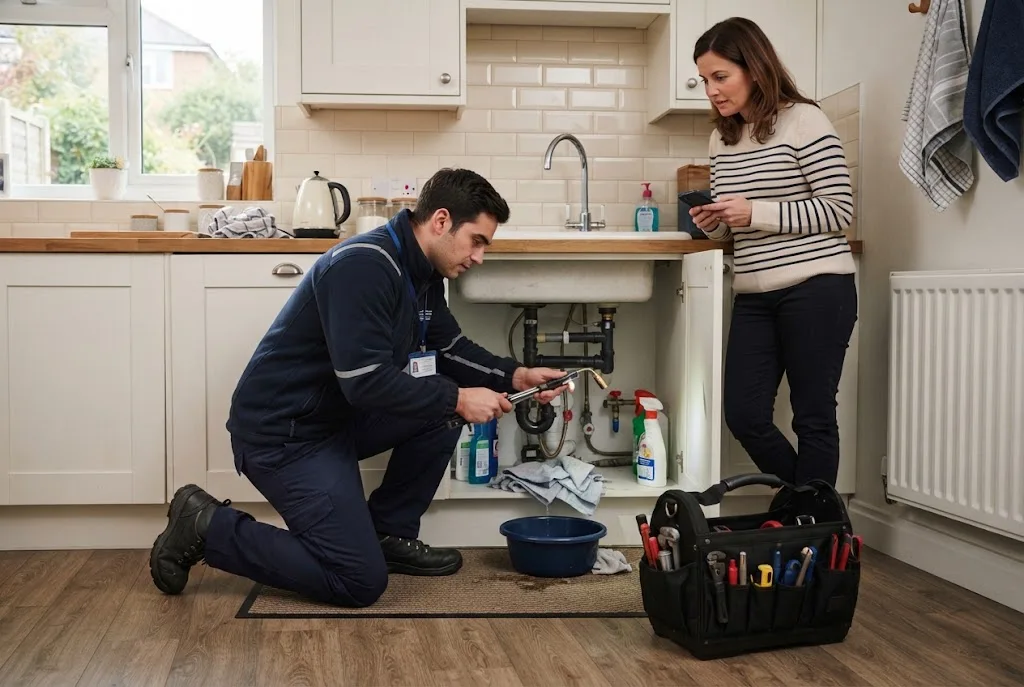
HomeServe plumbing is one of the areas commonly associated with its home emergency products. Depending on the relevant policy, plumbing and drainage assistance may address issues such as leaking pipes, blocked drains, damaged waste pipes and problems affecting toilet facilities.
Some HomeServe documentation also distinguishes between plumbing within a property and external water supply pipes. Responsibility can vary for flats and properties where parts of a system are shared or maintained by another party.
This distinction is important for homeowners and leaseholders because having a plumbing problem does not automatically mean that every part of the plumbing infrastructure is the customer’s responsibility.
HomeServe Plumbing and Electrics Cover
Some HomeServe arrangements have combined different household systems under broader emergency protection. HomeServe electrical documentation, for example, describes cover relating to domestic electrical wiring and certain electrical emergencies while listing specific exclusions.
Importantly, electrical wiring and electrical appliances are not necessarily treated in the same way. A policy may cover permanent wiring while excluding an appliance such as a washing machine or kettle. This is one reason homeowners should identify whether they need household-system protection, appliance protection or both.
For appliance faults specifically, a dedicated appliance repair service may be more relevant than a policy focused on fixed household systems.
HomeServe Emergency Cover and Home Assistance
HomeServe emergency cover is intended to address specified problems that require prompt attention. Historical UK policy documents show that certain HomeServe arrangements provided 24-hour claim lines and defined emergency response procedures.
Nevertheless, “emergency cover” does not mean every household fault automatically qualifies. The definition of an emergency, the circumstances that trigger assistance, claim limits and exclusions all depend on the applicable agreement.
For homeowners comparing different plans, it is useful to ask whether the provider covers the actual systems that are most important to the property and whether the financial limits are suitable for potential repair costs.
Does HomeServe Cover Appliances?
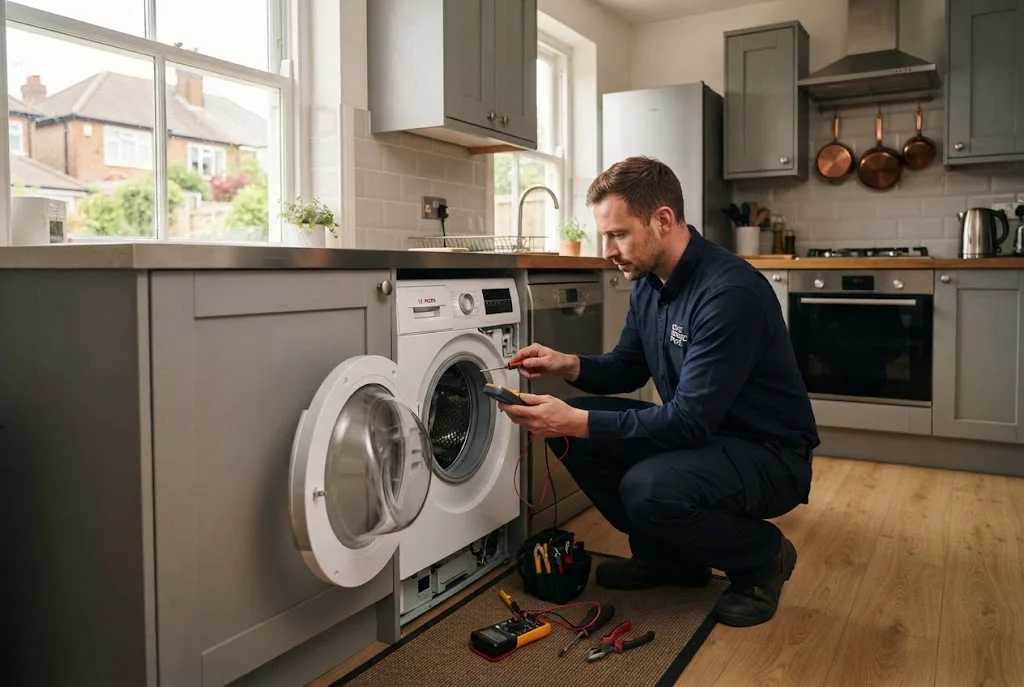
This is an area where homeowners should be particularly careful. HomeServe documentation for certain UK home emergency products has specifically excluded domestic appliances. In other words, cover for plumbing, electrical wiring or other fixed systems should not automatically be interpreted as cover for a washing machine, refrigerator, dishwasher or cooker.
Appliance protection is a separate area of the home services market. Domestic & General, for example, currently describes appliance protection covering products such as washing machines, dishwashers and fridge freezers, with repair or replacement provisions depending on the relevant plan.
For a household comparing options, this distinction can be useful: a home emergency plan and an appliance protection plan may address different risks.
HomeServe Boiler Service Plans
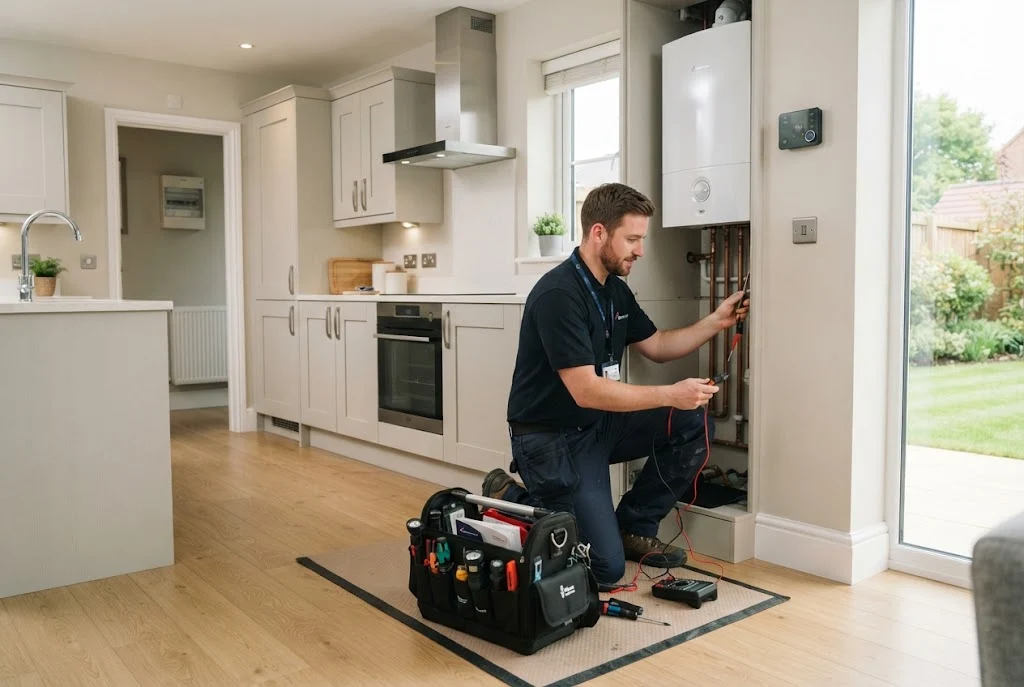
HomeServe boiler service plans and related heating products have appeared in UK HomeServe documentation. One policy document describes a gas boiler service and a boiler health check as part of a particular home emergency arrangement, subject to the terms and eligibility requirements of that policy.
Boiler service and boiler breakdown cover should not be treated as identical. A service is a planned inspection intended to assess and maintain a boiler, while breakdown assistance deals with a fault that has already occurred.
When comparing heating products, homeowners should therefore check whether a plan provides servicing, breakdown repairs, replacement contributions or a combination of these features.
HomeServe Services vs Domestic & General Services
HomeServe and Domestic & General operate in overlapping areas of household support, but their product focus can differ. HomeServe’s UK documentation has included home emergency categories such as plumbing, drainage and electrical systems, while Domestic & General places a strong emphasis on appliance protection and repair.
Domestic & General currently describes appliance protection with repair and replacement provisions and says customers can obtain repairs for covered appliances. Its published product information includes appliance categories such as washing machines, dishwashers and refrigerators.
Domestic & General also offers heating-related plans. Its published terms for a boiler plan distinguish between different levels of protection, with certain plans including an annual boiler service.
These differences do not mean one type of service is universally suitable. They simply illustrate why homeowners should compare the specific risk they want to protect rather than comparing company names alone.
What About Domestic and General Customer Service?
People searching for domestic and general customer service may be looking for help with an existing appliance protection or heating plan. The appropriate contact route depends on the product and provider relationship.
Domestic & General’s current appliance protection information provides online options for booking repairs and accessing support. Its published information also explains that customers can arrange repairs for covered appliances and, where an appliance cannot be repaired under the applicable protection, replacement provisions may apply.
When contacting any provider, it is useful to have the policy number, appliance details, address and a clear description of the problem available. This can make it easier for the provider to identify the relevant plan and next steps.
Can You Cancel HomeServe?
Customers searching “cancel HomeServe” should first check the cancellation provisions contained in their particular agreement. The terms can vary depending on the product, date of purchase and applicable contract.
Before cancelling, it may also be useful to check whether another insurance policy, warranty or service agreement already provides similar protection. HomeServe’s historical UK documentation includes provisions dealing with cancellation, policy terms and circumstances where equivalent cover elsewhere may be relevant.
Rather than assuming that cancelling one plan leaves a household fully protected by another, homeowners should compare the actual terms of any replacement arrangement first.
What Are offer.homeserve and offer.homeserve.co.uk?
People searching for terms such as offer.homeserve or offer.homeserve.co.uk may be looking for a HomeServe promotional or offer-related page. Searchers should verify that they are using an official HomeServe domain and review the offer’s terms before purchasing a plan.
Promotional pricing can change, and an introductory offer does not necessarily represent the ongoing cost of a service. Checking the full policy, renewal terms, excesses and coverage limits is more useful than assessing a plan on its initial promotional price alone.
HomeServe Services and Home Maintenance
Emergency protection should not be confused with routine property upkeep. Home maintenance services are generally intended to keep a property and its systems in suitable condition, while emergency cover is designed around specified unexpected problems.
For homeowners, these services can therefore play different roles. Regular home maintenance services can help identify developing issues, while emergency assistance may provide a route for dealing with eligible urgent faults.
Similarly, household appliances may require dedicated home utility services or specialist appliance support depending on the problem and the arrangements already in place.
Questions to Ask Before Choosing a Home Service Plan
Before purchasing any home protection or service plan, homeowners should look beyond the provider’s headline description. The following questions can help clarify what is actually being purchased:
- Which systems and appliances are covered?
- What counts as an emergency?
- Are parts and labour included?
- Is there an excess per claim?
- Are there annual or per-claim limits?
- Are pre-existing faults excluded?
- Does the plan include routine servicing?
- Are replacement costs included if a repair is not possible?
- Are there restrictions based on the age of the appliance or system?
- How is emergency assistance requested?
These questions can reveal important differences between apparently similar products.
Final Thoughts on HomeServe Services
HomeServe services cover a range of home assistance products, but the exact protection depends on the particular UK policy or service agreement. HomeServe documentation has included plumbing, drainage, electrical and heating-related assistance, while individual policies also contain important exclusions and limits.
Domestic & General has a different emphasis in several areas, particularly appliance protection and repair, although it also offers heating-related products.
For UK homeowners, the most useful approach is to compare the actual coverage rather than relying on company names or broad descriptions. Check what is covered, what is excluded, how claims work and whether the plan complements existing insurance, warranties and maintenance arrangements.