
Understanding the difference between an MOT and service is an important part of responsible vehicle ownership in the UK. Although both involve checking a vehicle, they serve different purposes. An MOT is a statutory test covering specific safety and environmental requirements, while servicing is a broader maintenance process designed to help keep a vehicle in good operating condition.
Keeping both requirements organised can help motorists stay on top of vehicle compliance, maintenance and road safety. It can also make it easier to identify developing faults before they become more disruptive. Whether you own a newer car, an older vehicle or a high-mileage commuter, understanding how MOT testing and professional servicing work together can support better ownership planning.
What Is an MOT and Service?
An MOT and a service are separate processes, even though many garages offer them together. The MOT is a legally required test for vehicles that fall within the relevant testing requirements. It checks whether the vehicle meets specific standards at the time of the test.
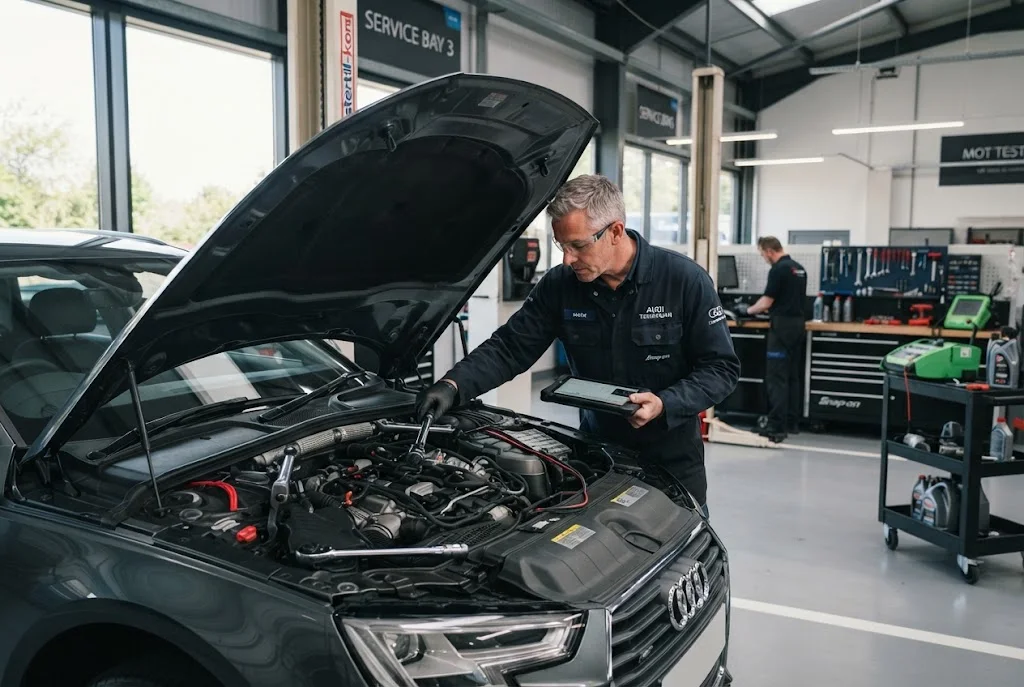
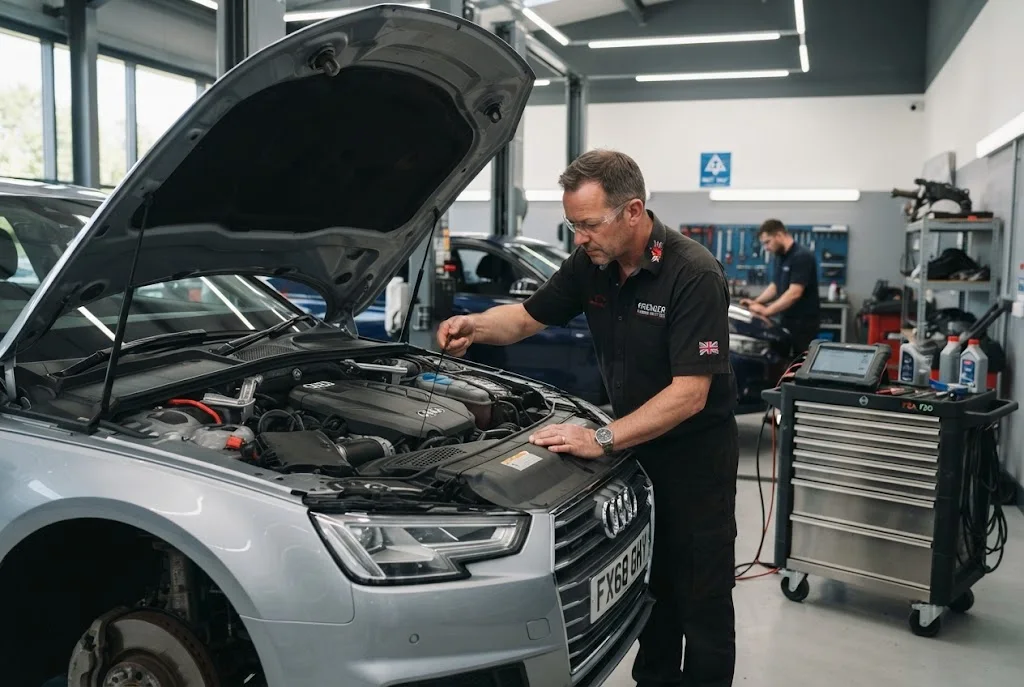
A service is a maintenance appointment. Depending on the vehicle and service level, it can involve inspections, fluid checks, oil and filter replacement, brake checks, tyre checks and other manufacturer-recommended maintenance.
This distinction is important because passing an MOT does not mean that a vehicle has received a complete service. Likewise, having a vehicle serviced does not automatically mean that it has passed an MOT.
For broader information about professional automotive care, see our guide to auto services.
MOT and Service: What’s the Difference?
The simplest way to understand the difference is to consider their primary purposes.
- MOT: A statutory test that assesses specific legal safety and environmental requirements.
- Service: Planned maintenance intended to inspect and maintain the vehicle according to its requirements.
- Repair: Corrective work carried out when a fault, damaged component or worn part needs attention.
An MOT therefore provides a snapshot of whether the vehicle meets the requirements covered by the test at that particular time. Servicing takes a wider maintenance approach and can cover items that are outside the scope of the MOT.
For this reason, drivers should not use the MOT date as their only maintenance reminder. The vehicle’s service schedule should be monitored separately.
What Does an MOT Check?
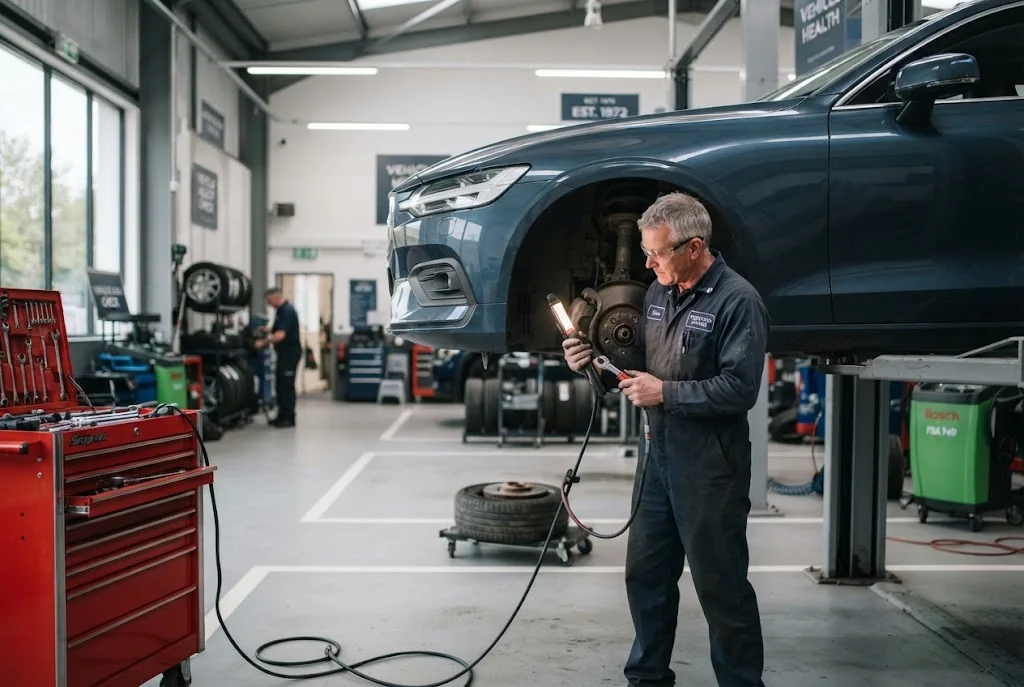
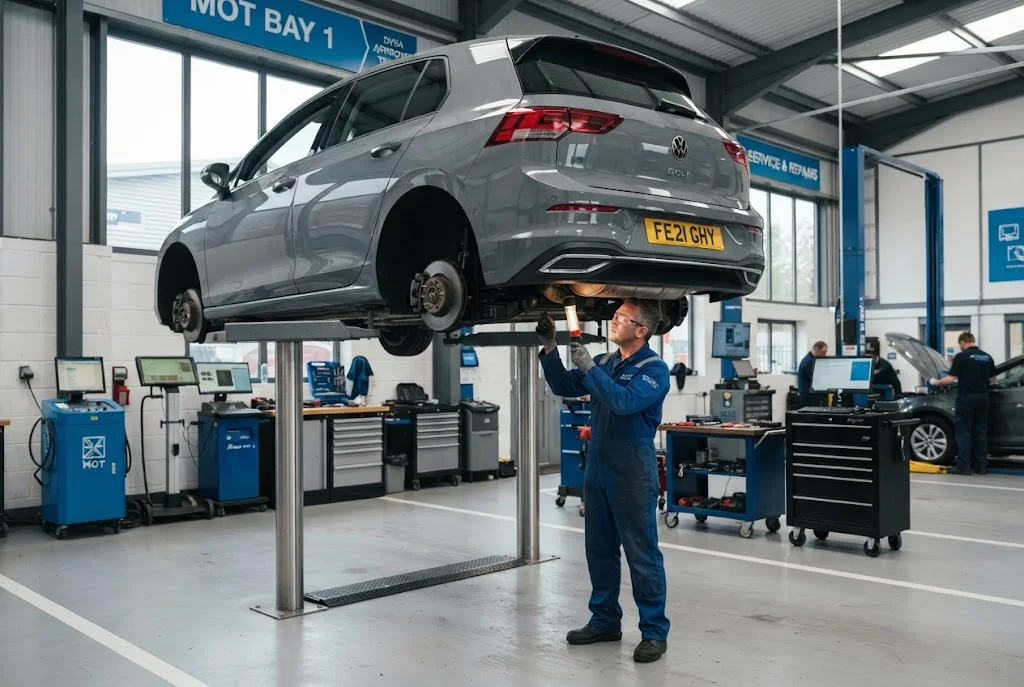
An MOT test examines specific parts and systems according to the applicable testing standards. Depending on the vehicle, areas assessed can include brakes, tyres, lights, steering, suspension, bodywork and emissions-related requirements.
The MOT is not intended to provide a complete mechanical inspection of every component. A vehicle can therefore pass its MOT while still having maintenance requirements that are not part of the statutory test.
Drivers can use the official GOV.UK MOT guidance to check current information about MOT requirements, fees and the testing process.
Why Regular Servicing Still Matters After an MOT
Passing an MOT can provide useful confirmation that the vehicle met the applicable test requirements at the time of inspection. However, it does not remove the need for ongoing maintenance.
Components can wear between MOT tests, and some maintenance items are not assessed in the same way during an MOT. Engine oil, filters and other manufacturer-specific service requirements are examples of areas that may form part of routine servicing rather than the statutory test.
This is why responsible vehicle care involves more than waiting for the next MOT. Drivers should continue following the manufacturer’s service schedule and carry out appropriate checks throughout the year.
Our vehicle maintenance guide explains how preventive maintenance can fit into a wider ownership plan.
When Is an MOT Required?
Whether a vehicle requires an MOT depends on its age and category, with different rules applying to different vehicle types. Drivers should check the current requirements for their specific vehicle rather than assuming that every vehicle follows exactly the same schedule.
For cars and other applicable vehicles, the MOT becomes an important recurring part of ownership once the vehicle reaches the relevant age threshold. The exact date of the next MOT can be checked using the official government service.
Owners should avoid relying solely on memory. Recording the MOT expiry date alongside the service schedule can help prevent important deadlines from being overlooked.
Understanding Service Intervals
Service intervals are determined by the vehicle manufacturer and can vary considerably between makes, models and engines. Some vehicles use mileage-based intervals, while others also specify a maximum period between services.
The vehicle handbook and manufacturer information should therefore be used when determining when servicing is due. Dashboard service indicators can also provide reminders on some vehicles.
Driving conditions can influence maintenance requirements as well. Frequent short journeys, heavy traffic, high mileage or demanding operating conditions may place different demands on vehicle components.
For a detailed explanation of routine maintenance appointments, see our car servicing guide.
Full Service, Interim Service and MOT
Drivers may encounter different service packages when booking vehicle maintenance. An interim service is generally a more limited maintenance appointment, while a full service normally covers a broader range of inspections and scheduled maintenance items.
The precise contents vary between vehicles and service providers. Before booking, drivers should check what is included rather than assuming that every garage uses identical definitions.
An MOT remains separate from these service levels. Some garages offer an MOT and service appointment together for convenience, but the MOT test and servicing work still have different purposes.
Can You Have an MOT and Service at the Same Time?
Yes, many workshops offer combined MOT and service appointments. This can be convenient because the driver only needs to arrange one visit to the garage.
However, combining the appointments does not turn the two processes into one. The MOT still has to be carried out according to the applicable testing requirements, while the service should follow the vehicle’s maintenance requirements.
A combined appointment can also make it easier to identify differences between an MOT defect, a service recommendation and a separate repair requirement. Drivers should ask the garage to explain each finding clearly.
What Happens If a Vehicle Fails Its MOT?
If a vehicle fails its MOT, the test documentation identifies the relevant defects. The vehicle may then require repair work before it can meet the necessary requirements for a pass.
The appropriate repair depends on the defect identified. It could involve areas such as brakes, tyres, lighting, suspension, steering, emissions or another component covered by the test.
Drivers should ask the repair provider to explain the defect and what work is required. An MOT failure does not necessarily mean that the vehicle has a problem with every major mechanical system; the repair requirement relates to the specific defects identified during testing.
After repairs have been completed, the applicable rules determine whether and how the vehicle needs to be presented for a retest.
MOT Advisories and Maintenance Planning
An MOT result can also contain advisory information about components that may require attention in the future. An advisory is not the same as a failure, but it can provide useful information for maintenance planning.
Drivers can keep a record of advisories and discuss them with their mechanic during future servicing. This can help owners monitor components rather than forgetting about them until another issue develops.
However, an advisory should not automatically be interpreted as a prediction of when a component will fail. The condition of the vehicle can change over time, so professional inspection remains important when deciding whether work is required.
MOT and Service for Vehicle Safety
Both MOT testing and servicing contribute to responsible vehicle ownership, but neither should replace regular checks by the driver.
Drivers should continue to monitor important safety-related areas such as:
- Tyre condition and pressures
- Lights and indicators
- Brake performance
- Windscreen condition
- Wipers and washers
- Fluid levels
- Dashboard warning lights
- Steering behaviour
- Unusual noises or vibrations
Changes in any of these areas can justify further investigation. A vehicle should not be assumed to be safe simply because it recently passed an MOT.
Choosing a Garage for an MOT and Service
When booking an MOT and service, drivers should consider whether the garage is appropriately equipped and experienced for their vehicle. MOT testing facilities must meet the applicable requirements, while servicing quality depends on the workshop’s technical capabilities and maintenance procedures.
Before booking, ask:
- What is included in the service?
- Which service level is being provided?
- Is the MOT fee separate from the service price?
- Will additional repairs require approval?
- Will the garage provide service documentation?
- Are diagnostic checks included where appropriate?
- What happens if the MOT identifies a defect?
A clear explanation of the process can help prevent misunderstandings about what the quoted price covers.
For further guidance on selecting an appropriate workshop, see our article on trusted mechanics.
MOT and Service Costs
The cost of an MOT is subject to rules around maximum test fees, while service costs vary depending on the vehicle, service level, parts, labour and maintenance requirements.
A combined booking can sometimes be convenient, but motorists should still understand the individual costs involved. A low headline price may not include additional maintenance items, replacement parts or repairs identified during the appointment.
When comparing quotes, check whether the same work is being offered. Two service packages may have different inspection lists, consumables or replacement items, making their advertised prices difficult to compare directly.
Preparing for an MOT and Service
Drivers can make a workshop appointment more useful by reviewing the vehicle before taking it in. Check the service history, mileage and any dashboard reminders. Make a note of unusual symptoms that have appeared since the previous appointment.
It is particularly useful to tell the technician about problems such as unusual noises, changes in steering, braking symptoms, warning lights or starting difficulties. These observations can provide useful context alongside the formal inspection.
If the vehicle has recently undergone repairs or has particular modifications, mention them to the workshop where relevant.
MOT and Service Records
Keeping accurate records can make vehicle ownership easier to manage. Owners should retain MOT results, service invoices, repair documents and other relevant maintenance information.
A good record can show when routine servicing was completed and which components have previously been replaced. It can also help a technician understand the vehicle’s history when investigating a new fault.
Service records can become especially useful when selling a vehicle because they provide evidence of maintenance carried out during ownership. Drivers researching the importance of vehicle records can also read our guide to checking a car’s service history.
Common Mistakes Drivers Make
One common mistake is treating the MOT as a complete health check. The MOT has a defined scope, so it cannot replace comprehensive servicing and ongoing maintenance.
Another mistake is ignoring the manufacturer’s service schedule because the vehicle has recently passed its MOT. The two schedules should be tracked independently.
Drivers can also make maintenance more difficult by ignoring warning lights or unusual symptoms until the next annual test. Problems do not necessarily wait for an MOT date, so appropriate professional advice should be sought when a significant change occurs.
MOT and Service for Older and High-Mileage Vehicles
Older and high-mileage vehicles can benefit from particularly careful maintenance planning. Age and mileage may affect components differently, and previous service history can provide important context.
An MOT can identify specific defects covered by the test, while a service allows broader maintenance checks. Combining the information from both processes can help owners build a more complete picture of the vehicle’s condition.
Owners should still follow manufacturer recommendations and professional advice rather than assuming that age or mileage alone determines which parts need replacement.
MOT and Service for Hybrid and Electric Vehicles
Hybrid and electric vehicles also require appropriate maintenance and statutory testing where applicable. Their different powertrain technology means that some servicing requirements differ from conventional petrol and diesel vehicles.
At the same time, tyres, brakes, suspension, steering, lights and other safety-related components still require appropriate attention.
Where work involves high-voltage systems or specialised electrical components, drivers should choose a workshop with suitable training and equipment. Our EV servicing guide covers additional considerations for electric vehicle maintenance.
Building a Responsible Ownership Schedule
A practical ownership schedule can include separate reminders for MOT expiry, manufacturer servicing, tyre checks and other maintenance requirements. Keeping these dates together can make it easier to plan ahead.
Drivers can also review MOT results and service records after each appointment. If a technician identifies future maintenance requirements, recording them can help ensure that they are considered at the appropriate time.
This approach turns vehicle maintenance into a continuing process rather than a single annual event.
Final Thoughts on MOT and Service
An MOT and service are both important parts of UK vehicle ownership, but they perform different functions. The MOT is a statutory test with defined inspection requirements, while servicing provides broader maintenance based on the vehicle’s schedule and condition.
Drivers should keep both schedules up to date, continue checking their vehicles between appointments and respond appropriately when warning signs or maintenance issues appear. Choosing a suitable workshop and keeping clear records can also make vehicle ownership more organised.
Ultimately, responsible vehicle care comes from combining statutory testing with regular servicing, preventive maintenance and timely repairs. Understanding the role of each process allows motorists to make sensible maintenance decisions and support the safety and reliability of their vehicles throughout their ownership.