
Regular vehicle maintenance is one of the most practical ways for UK drivers to keep their cars safe, dependable and suitable for everyday use. Maintenance involves much more than arranging an annual service. It includes routine checks, scheduled servicing, inspections, fluid management, tyre care and timely attention to developing faults.
A well-planned approach can help drivers understand what their vehicles need, when maintenance is due and which issues should be investigated by a professional. It can also make ownership more predictable by reducing the risk of small problems being overlooked until they become more complicated or expensive.
What Is Vehicle Maintenance?
Vehicle maintenance refers to the regular checks, servicing and corrective work carried out to keep a vehicle in suitable operating condition. It includes both preventive maintenance and repairs required when a component develops a fault or becomes worn.
The precise maintenance requirements vary between vehicles. Manufacturers establish service schedules based on factors such as mileage, time, engine or powertrain design and operating conditions. Owners should therefore use the vehicle handbook and manufacturer guidance as the starting point for planned maintenance.
Professional workshops can complement this schedule by inspecting components, identifying developing problems and carrying out maintenance that requires specialist tools or technical knowledge.
Why Vehicle Maintenance Matters
Cars contain numerous mechanical, electrical and safety-related systems that work together during everyday driving. Components naturally experience wear over time, while fluids, filters, tyres and other consumable items require periodic attention.
Regular maintenance gives owners an opportunity to identify issues before they become more disruptive. A worn component may initially produce only a subtle change in the vehicle, while a warning light or unusual noise may indicate that further investigation is needed.
Maintenance is also closely connected to responsible road use. GOV.UK advises drivers to carry out regular checks on important items such as tyres, lights, brakes, windows and mirrors, while also ensuring that the vehicle remains safe to drive between MOT tests.
For broader information about professional automotive support, see our guide to auto services.
Vehicle Maintenance and Preventive Care
Preventive maintenance focuses on keeping important components in good condition rather than waiting for a failure. It can include scheduled servicing, fluid checks, tyre inspections, filter replacement and inspections of systems that are known to require attention at particular intervals.
The advantage of preventive care is that maintenance becomes planned rather than purely reactive. Drivers can monitor service intervals, keep records and discuss upcoming work with a garage before a component reaches an advanced stage of wear.
Preventive maintenance does not guarantee that a vehicle will never break down. Unexpected faults can occur even on well-maintained cars. However, a consistent maintenance routine can help reduce avoidable problems and provide a clearer picture of the vehicle’s condition.
Creating a Vehicle Maintenance Schedule
A maintenance schedule should begin with the manufacturer’s recommendations. Different vehicles have different requirements, so there is no single interval that applies to every car.
A useful maintenance plan can include:
- Scheduled servicing based on manufacturer recommendations
- Regular tyre pressure and condition checks
- Brake inspections
- Engine oil and fluid checks
- Battery condition monitoring
- Inspection of lights and electrical equipment
- Windscreen, wiper and washer checks
- Suspension and steering inspections when required
- Filter replacement according to the service schedule
- Timely investigation of warning lights or unusual symptoms
Some work is time-based, some is mileage-based and some depends on the vehicle’s actual condition. Owners should therefore avoid treating a generic online maintenance calendar as a replacement for the manufacturer’s schedule.
Vehicle Maintenance Checks Drivers Can Perform
Not every maintenance check requires specialist workshop equipment. Drivers can perform several basic inspections as part of their normal vehicle-care routine.
Check the Tyres
Tyres should be checked regularly for correct inflation, visible damage and signs of unusual or uneven wear. The recommended tyre pressures are normally provided by the vehicle manufacturer, often on a label or in the handbook.
Uneven wear can sometimes indicate issues beyond the tyre itself, including alignment, suspension or steering problems. If wear appears unusual, professional inspection can help identify the underlying cause.
Check Lights
Headlights, brake lights, indicators, reversing lights and other exterior lights are important for visibility and communication with other road users. A failed bulb or electrical issue should be addressed promptly.
Monitor Fluid Levels
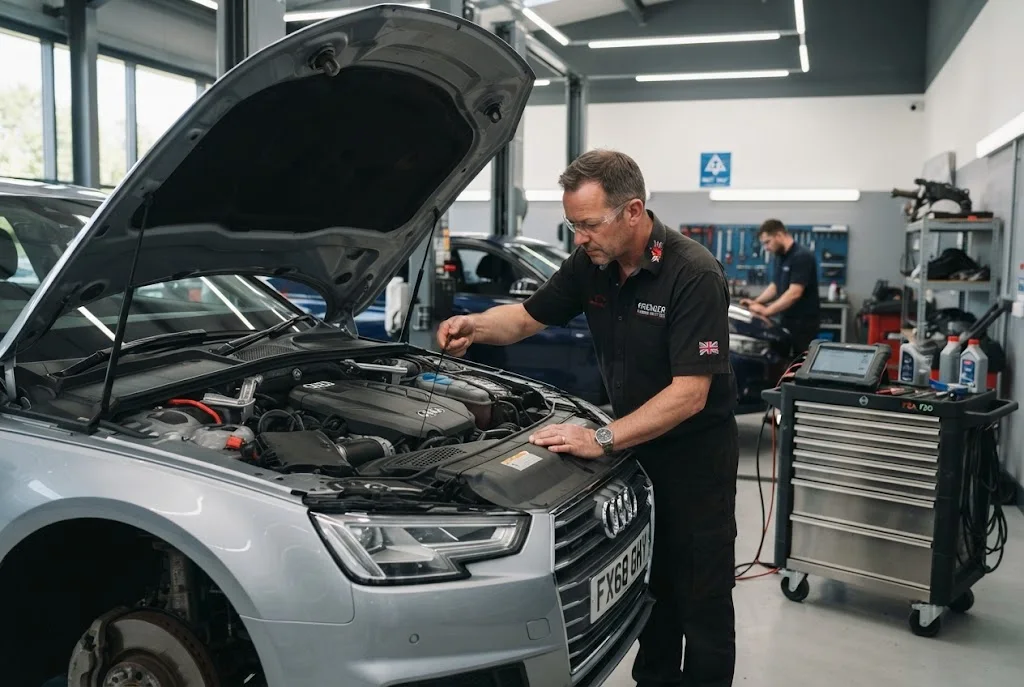
Depending on the vehicle, owners may need to monitor engine oil, coolant, screen wash and other fluids. The vehicle handbook should be used to identify the correct fluids and appropriate checking procedures.
Repeatedly low fluid levels can indicate a leak or another underlying problem. Simply topping up a fluid without investigating an ongoing loss may not resolve the cause.
Pay Attention to Warning Signs
Drivers know how their vehicles normally feel and sound. Changes such as unusual noises, vibrations, steering behaviour, braking performance, starting difficulties or warning lights should not be ignored.
A professional inspection can determine whether a symptom requires immediate repair, routine maintenance or further diagnostic investigation.
Professional Vehicle Maintenance
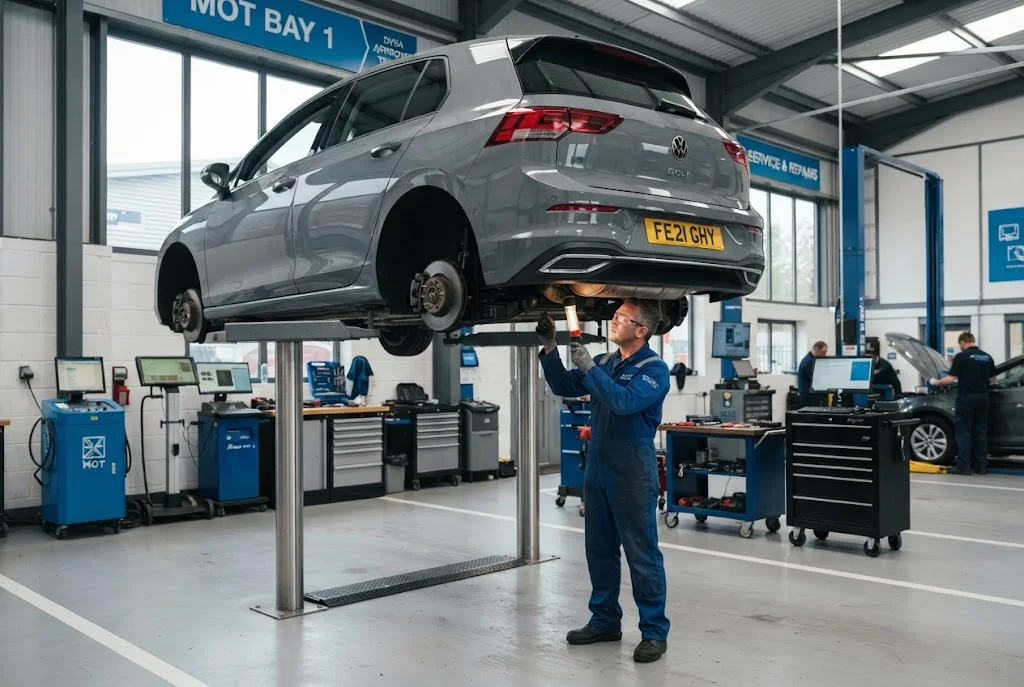
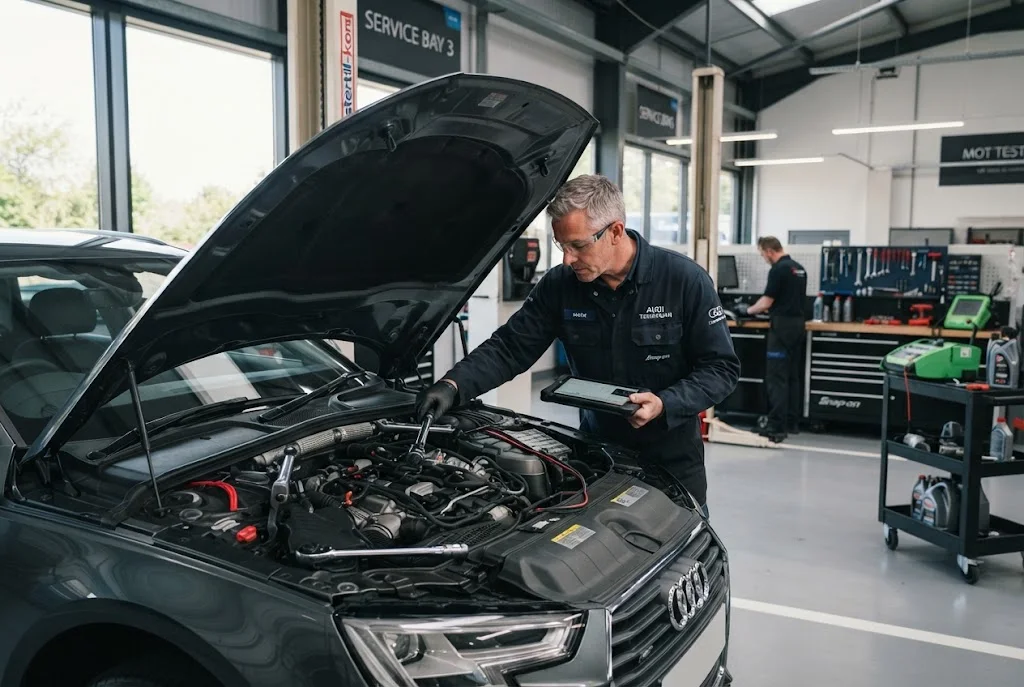
Some maintenance work requires specialist equipment, technical knowledge or access to vehicle-specific information. Professional workshops can inspect systems that are difficult for owners to assess at home and can carry out scheduled work according to the vehicle’s requirements.
Professional maintenance may involve:
- Scheduled vehicle servicing
- Electronic diagnostics
- Brake inspection and replacement
- Suspension and steering work
- Wheel alignment
- Battery testing and replacement
- Air-conditioning servicing
- Engine and transmission maintenance
- Electrical fault diagnosis
- Hybrid and electric vehicle maintenance
When selecting a workshop, drivers should consider whether the technicians have suitable experience with the vehicle and whether the garage has the equipment needed for the required work.
Vehicle Maintenance and Service Intervals
Service intervals are an important part of maintenance planning. The manufacturer’s recommendations may specify a particular mileage, time period or combination of the two.
Some vehicles use service indicators that display information on the dashboard. These systems can be useful reminders, but owners should still understand the underlying maintenance requirements rather than relying solely on a dashboard message.
Driving conditions can also influence maintenance needs. Frequent short trips, heavy traffic, high annual mileage and other demanding use patterns may affect how certain components and fluids are treated. The manufacturer’s guidance should remain the primary reference when determining appropriate service intervals.
Our car servicing guide explains the difference between routine servicing, interim services and full car services in greater detail.
Vehicle Maintenance for High-Mileage Cars
High mileage does not automatically mean that a vehicle is unreliable. Many factors influence a car’s condition, including its maintenance history, driving conditions, previous repairs and how consistently scheduled work has been completed.
However, higher mileage can mean that certain components have experienced more use. Brakes, suspension parts, tyres, cooling systems, belts, batteries and other components may require closer attention depending on the vehicle.
Owners of high-mileage cars can benefit from keeping detailed records of repairs and maintenance. Knowing when major components were last inspected or replaced can make future planning much easier.
Vehicle Maintenance for Older Cars
Older vehicles may require attention to both mileage-related wear and age-related deterioration. Rubber components, seals, hoses, electrical connections and other parts can change with age even when a vehicle has covered relatively few miles.
For this reason, maintenance should not be based exclusively on mileage. Time-based recommendations in the manufacturer’s service information can be equally important.
When purchasing an older used car, reviewing its service history can also provide useful context. A documented history does not guarantee future reliability, but it can show whether scheduled maintenance has been carried out consistently.
Drivers researching vehicle records can also read our guide on checking a car’s service history.
Vehicle Maintenance and MOT Testing
Vehicle maintenance and MOT testing should be viewed as separate but complementary parts of responsible car ownership. An MOT is a statutory test that assesses specific requirements at the time of testing. Routine maintenance covers a much wider range of ongoing vehicle care.
A current MOT certificate does not mean that a vehicle requires no further maintenance until the next test. Components can wear or develop faults during the year, which is why drivers should continue checking their vehicles and following the manufacturer’s service schedule.
The official GOV.UK MOT guidance provides information about MOT requirements, while the Driver and Vehicle Standards Agency publishes inspection guidance used during MOT testing.
Our MOT and service guide provides further information about how statutory testing and ongoing maintenance differ.
Tyres, Brakes and Suspension
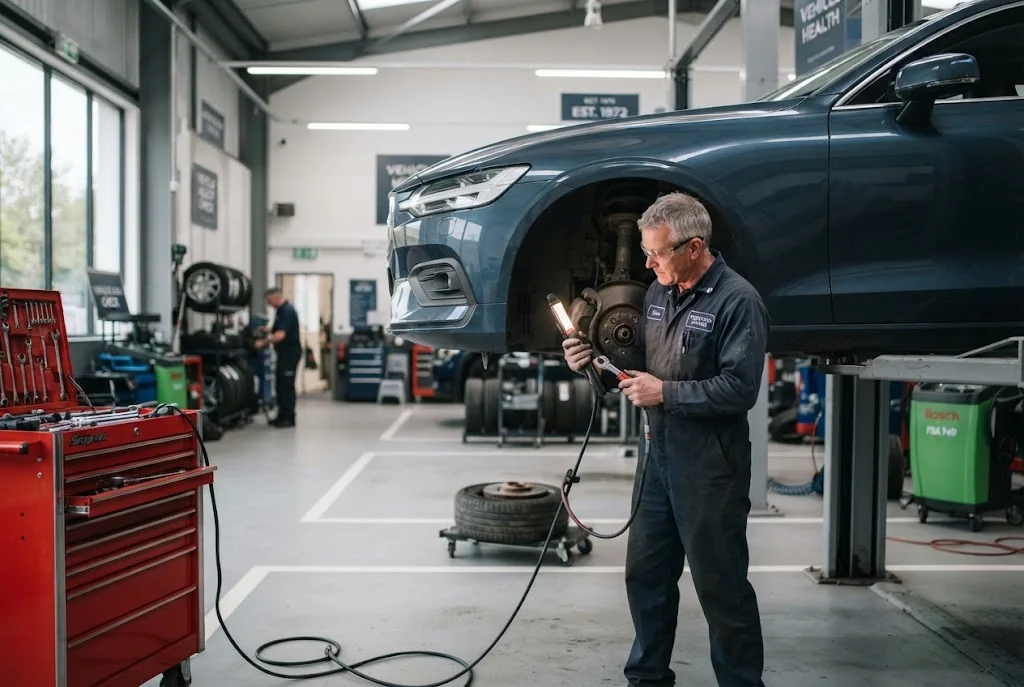
Tyres, brakes and suspension are among the most important areas of vehicle maintenance because they influence how a vehicle handles, stops and maintains contact with the road.
The Tyres should be inspected for pressure, condition and unusual wear. Brake components can gradually wear through normal use, while suspension components can deteriorate over time or become damaged by impacts and poor road surfaces.
Drivers should seek professional advice when they notice symptoms such as unusual braking noises, steering changes, excessive vibration, pulling to one side or uneven tyre wear. These symptoms can have different causes and should be properly assessed before repair decisions are made.
Where appropriate, wheel alignment can form part of a wider maintenance assessment. Our wheel alignment guide explains situations in which alignment may need attention.
Vehicle Maintenance for Hybrid and Electric Cars
Hybrid and electric vehicles have different powertrain designs from conventional petrol and diesel cars, but they still require ongoing maintenance. Tyres, brakes, steering, suspension, lights, cooling systems and other components continue to require appropriate attention.
High-voltage electrical systems introduce additional technical considerations. Owners should use a workshop with appropriate training and equipment when work involves high-voltage components or vehicle-specific electrical systems.
Regenerative braking can also affect brake usage in some electric and hybrid vehicles, but that does not mean conventional brake components should be ignored. They still require inspection and maintenance according to the vehicle’s requirements.
Our EV servicing guide covers specialist considerations for electric vehicle maintenance.
Keeping a Vehicle Maintenance Checklist
A simple maintenance checklist can help owners keep track of recurring tasks. The exact checklist should be adapted to the vehicle and manufacturer guidance, but it can include:
- Check tyre condition and pressures
- Check exterior lights
- Monitor dashboard warning lights
- Check relevant fluid levels
- Review upcoming service dates
- Record completed servicing and repairs
- Monitor unusual noises or vibrations
- Check windscreen and wipers
- Arrange professional inspections when symptoms appear
Keeping records alongside the checklist can make maintenance planning more effective. Digital notes, invoices and service documents can all be useful when reviewing the vehicle’s history.
Planning Vehicle Maintenance Costs
Maintenance costs can vary significantly between vehicles and repairs. Routine servicing may be relatively predictable, while unexpected component failures can require additional expenditure.
One practical approach is to separate scheduled maintenance from unexpected repairs when planning a vehicle budget. Manufacturer service schedules can help identify recurring maintenance, while the vehicle’s age, mileage and history may provide clues about other areas that could eventually require attention.
When a workshop recommends additional work, ask for a clear explanation of the issue and the likely consequences of delaying it. An itemised estimate can also make it easier to understand parts, labour and other charges.
Choosing the Right Maintenance Provider
The right workshop should match the type of maintenance required. A general garage may be suitable for routine servicing and common repairs, while a specialist may be more appropriate for complex electrical systems, performance vehicles, hybrid systems or specific manufacturer requirements.
Before booking, consider the workshop’s experience, equipment, service documentation and approach to additional repairs. A professional provider should be willing to explain what has been inspected, what work is required and what may need attention in the future.
For more information about selecting an appropriate provider, see our guide to trusted mechanics.
Common Vehicle Maintenance Mistakes
Several avoidable habits can make vehicle ownership more difficult. One is waiting until the vehicle develops a serious fault before arranging maintenance. Another is assuming that a current MOT means that no other checks are necessary.
Ignoring dashboard warnings, postponing clearly recommended repairs indefinitely or failing to maintain accurate service records can also create unnecessary uncertainty.
Another common mistake is following generic maintenance advice without checking whether it applies to the specific vehicle. Manufacturer guidance should take priority because service intervals, fluids, components and inspection requirements can differ substantially between models.
Long-Term Vehicle Care
Effective long-term vehicle care is built around consistency. Regular driver checks, scheduled servicing, timely repairs and accurate records all contribute to a more organised approach to ownership.
Maintenance planning can also support vehicle longevity by ensuring that important components receive attention at appropriate intervals. While no maintenance programme can prevent every mechanical problem, it can reduce the likelihood of known service requirements being overlooked.
Owners who keep their vehicles for many years may find that a structured maintenance history becomes particularly valuable. It provides a record of the vehicle’s care and helps technicians understand what has already been completed.
Final Thoughts on Vehicle Maintenance
Vehicle maintenance is an ongoing responsibility rather than a once-a-year task. It combines manufacturer-recommended servicing, routine driver checks, preventive care and professional attention when faults or unusual symptoms appear.
The most effective maintenance plan is specific to the vehicle. Drivers should follow the manufacturer’s recommendations, monitor important safety-related components and keep clear records of servicing and repairs. Professional workshops can provide the inspections, diagnostics and technical work that cannot easily be completed at home.
By treating maintenance as part of everyday vehicle ownership, UK drivers can make better-informed decisions about servicing, repairs and future costs while supporting the safety and reliability of their vehicles.