
Good tyre services help a car stop, steer and travel as its maker intended. For UK drivers, that matters on wet motorways, busy town streets and rural roads alike. Tyres are the only parts of the car that touch the road. So their condition affects grip, braking and stability every time you drive.
Premium does not have to mean complicated or showy. In this guide, it means careful work, correct fitting, honest advice and regular checks. You will learn what tyre fitting involves, and what happens during replacement. You will also see how balancing differs from alignment, and which checks support tyre safety at home.
Key Takeaways
If you read nothing else, remember these points.
- Tyre fitting and replacement are skilled jobs that affect how safely a tyre performs.
- Balancing and alignment are separate services, and they solve different problems.
- Check pressure, tread, age and damage regularly as part of tyre maintenance.
- The UK legal minimum tread depth for cars is 1.6 mm.
- Good habits form part of preventive maintenance and support road safety.
What Are Premium Tyre Services?
Tyre services is a broad term for work that keeps tyres fitted, inflated and working correctly. It can include fitting new tyres, replacing worn or damaged tyres, balancing wheels, and checking alignment. It can also include puncture assessment, valve replacement and advice on condition and age.
A premium approach puts accuracy and safety before speed alone. The technician should fit the right size and specification for the vehicle. They should also follow the vehicle maker’s guidance and explain any problems they find. You should leave knowing what was done, what was checked, and what needs watching.
Tyre Fitting: What Happens Step by Step
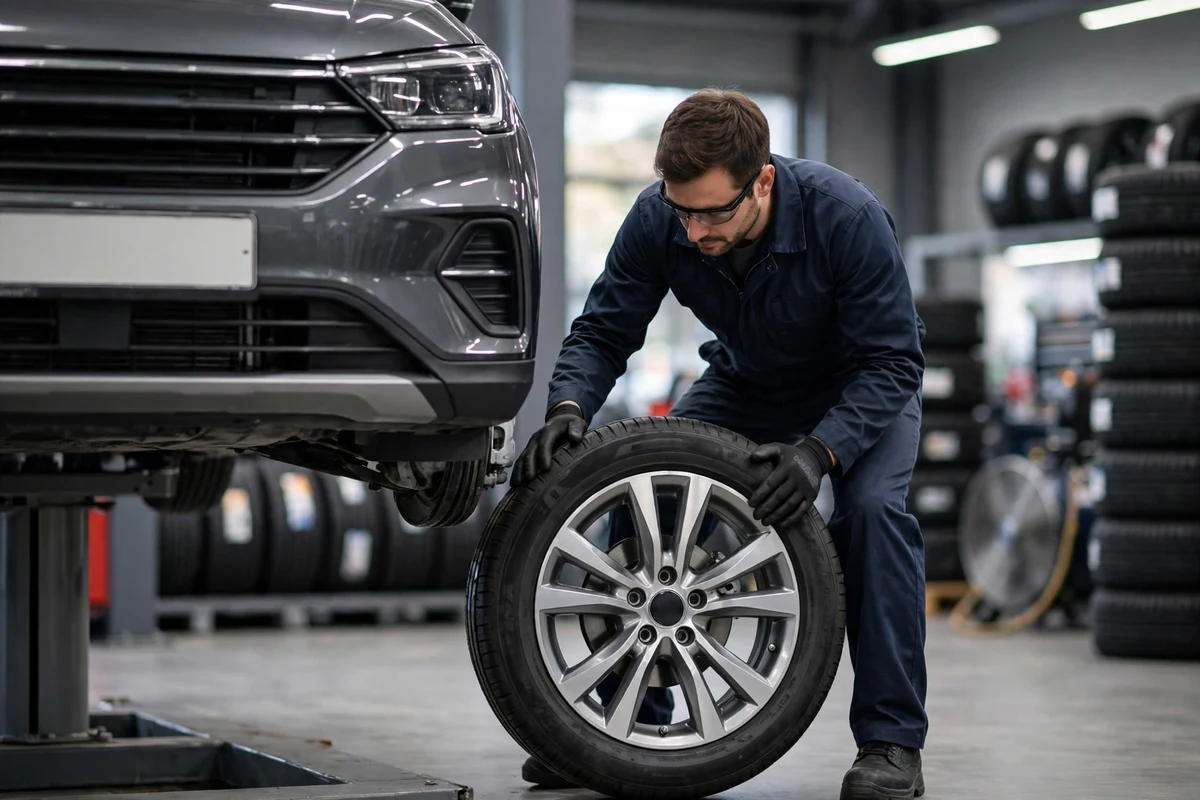
Tyre fitting is the process of removing a wheel, taking off the old tyre, and fitting a new one. The fitter checks that the new tyre matches the required size, load and speed information on the sidewall. They also inspect the wheel for obvious damage or corrosion that could affect the seal.
Next, the tyre is seated correctly on the rim and inflated to the recommended pressure. A new valve is commonly fitted, because old valves can perish and leak. The wheel is then balanced, checked again, and refitted with its fixings tightened correctly. Finally, the driver should be told if any other tyre or wheel needs attention.
Tyre Replacement: When and Why It Is Needed
Tyre replacement becomes necessary when a tyre is worn, damaged or too old to use with confidence. Worn tread cannot clear water or grip the road as well as healthy tread. Damage such as a deep cut, bulge or exposed cord also needs prompt professional assessment. Some punctures can be repaired safely, but not every puncture is suitable for repair.
Tell the fitter about any vibration, uneven wear or change in steering before work starts. Those clues may point to a problem beyond the tyre itself. Replacing a tyre without checking the cause of uneven wear can waste the new tyre. Ask whether the spare was checked too, if your car carries one.
Wheel Balancing and Wheel Alignment Are Separate Services
Drivers often hear these two terms together, so they can sound like the same job. They are not. Each service deals with a different part of how the wheel turns and points. Both are common tyre services, but a driver may need only one of them.
Wheel Balancing
Wheel balancing makes sure that weight is spread evenly around the wheel and tyre together. Small weights may be added to correct an imbalance found on a balancing machine. An unbalanced wheel can cause vibration, especially through the steering wheel at certain speeds. Balancing is normally part of fitting a new tyre, and it may be needed after a repair.
Wheel Alignment
Wheel alignment checks the angles at which the wheels sit and point. If those angles are wrong, tyres can wear unevenly and the car can pull to one side. Alignment is a separate check, and it does not replace balancing. Read our wheel alignment guide for a fuller explanation of signs such as uneven wear and an off-centre steering wheel.
Tyre Maintenance Checks Every Driver Can Do
Regular tyre maintenance does not take long, and it helps you spot trouble early. Do these checks when the tyres are cold, and repeat them before a long journey.
Check Tyre Pressure
Check pressure with a reliable gauge and compare it with the vehicle maker’s recommendation. You can usually find that figure in the handbook, on a door pillar, or inside the fuel flap. Under-inflated tyres can affect handling and wear the edges, while over-inflated tyres can wear the centre. Do not rely on how a tyre looks, because a tyre can be low without looking flat.
Check Tread Depth
Tread helps the tyre grip the road and move water away from the contact patch. For cars in the UK, the legal minimum is 1.6 mm. That depth must apply across the central three-quarters of the tread and around the whole tyre. Many drivers use tread wear indicators or a tread depth gauge to check. Replacing a tyre before it reaches the limit gives you a useful safety margin.
Look for Damage
Look over each tyre for cuts, bulges, cracks, nails and other objects stuck in the tread. A bulge in the sidewall can signal internal damage, so get it checked promptly. Also check the inner sidewall as far as you can, and look for uneven wear. If you are unsure about anything you find, ask a professional before a long drive.
Consider Tyre Age
Tyres age as well as wear, even when a car covers few miles. Rubber can harden and crack over time, which can affect grip. You can find the tyre’s date code on its sidewall, as part of the markings there. If a tyre is old, cracked or unknown in history, professional advice is worthwhile.
Tyre Safety and the MOT
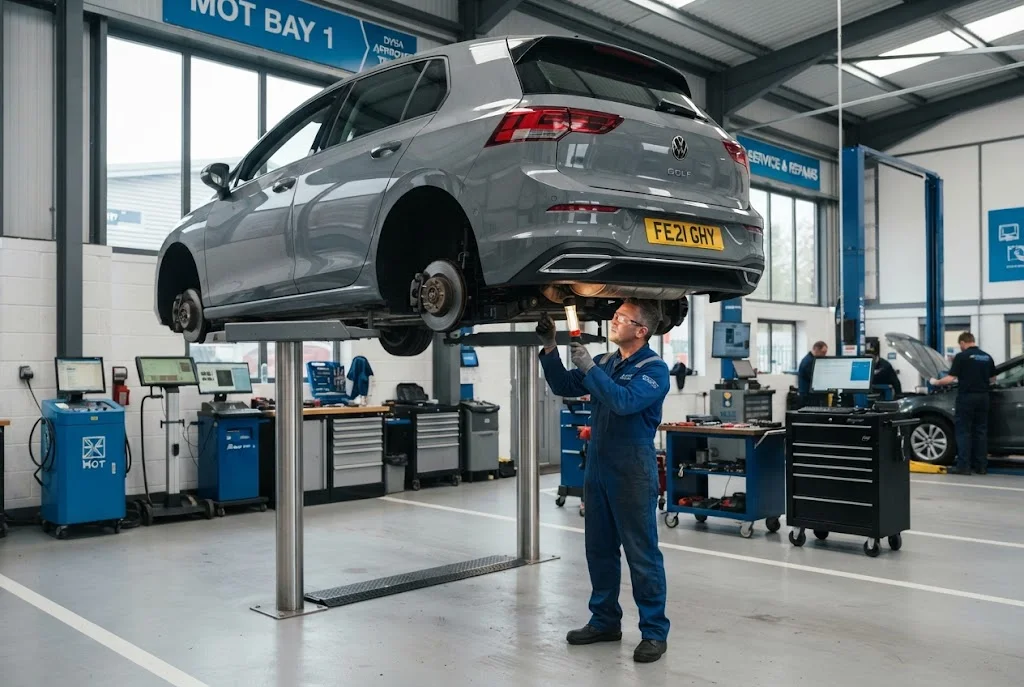
Tyre safety is not just about avoiding a fine or a failed test. It is about keeping enough grip for steering, braking and cornering in poor weather. Tyres are checked during the MOT, so worn or damaged tyres can lead to a failure. Our MOT and service guide explains how the MOT differs from regular servicing and why both matter.
Do not wait for the MOT to discover a tyre problem. A quick check each month, and before long trips, is a better habit. If a warning light for tyre pressure appears, check the tyres as soon as it is safe.
Preventive Maintenance and Road Safety
As part of preventive maintenance, tyre checks sit alongside brakes, lights, fluids and steering. Our vehicle maintenance guide shows how those checks fit into a wider routine for UK drivers. Keeping a simple record helps you notice patterns, such as repeated pressure loss. Repeated loss can point to a slow puncture, a valve fault or wheel damage. Acting early can protect the tyre, and it can stop a small fault becoming a breakdown.
Choosing Tyre Services and Questions to Ask
Choose a service that is clear about what is included before work starts. The best tyre services explain the work clearly before they start. Ask what size and specification will be fitted, and whether balancing and a new valve are included. Also ask how the old tyre will be disposed of, and whether alignment was checked or only offered.
Good communication is a useful sign. A careful fitter should explain uneven wear, damage or age in plain language. They should not pressure you into extra work without showing you the reason. If a quote seems to cover different work from another, compare the details, not just the headline.
Safety Habits for Every Journey
Safe driving habits protect your tyres and support road safety every day.
- Drive gently around potholes and kerbs, and slow down for poor surfaces.
- Avoid harsh braking and sharp acceleration when you can do so safely.
- Do not overload the car, and adjust pressures for heavy loads if the handbook advises it.
- Check the spare or the inflation kit, so you are ready if you need it.
- Get vibration, pulling or new noises checked promptly, rather than waiting.
These habits cannot prevent every puncture, but they reduce avoidable wear and damage.
Frequently Asked Questions
How often should I check my tyres?
Check pressure and condition regularly, ideally each month and before a long journey. Increase the checks if you drive high miles or carry heavy loads often.
Is wheel balancing the same as alignment?
No. Balancing evens out weight around the wheel, while alignment sets the wheel angles. They are different services, and a car may need one, the other, or both.
When should a tyre be replaced?
Replace a tyre when its tread is near the legal limit, or sooner if it is damaged or aged. A bulge, deep cut or exposed cord needs urgent professional advice.
Can a puncture always be repaired?
No. Suitability depends on where the puncture is, its size, and the tyre’s condition. A fitter needs to inspect the tyre properly before deciding.
What pressure should my tyres be?
Use the pressure recommended by your vehicle maker for your model and load. You will find it in the handbook or on a label on the car itself.
Final Thoughts
Premium tyre services are really about doing the basics properly, every time. Fit the right tyre well, balance it, check alignment when needed, and maintain it between visits. Those steps support tyre safety, steadier handling and better road safety for everyone. If you are unsure about a tyre today, get it checked before your next journey.