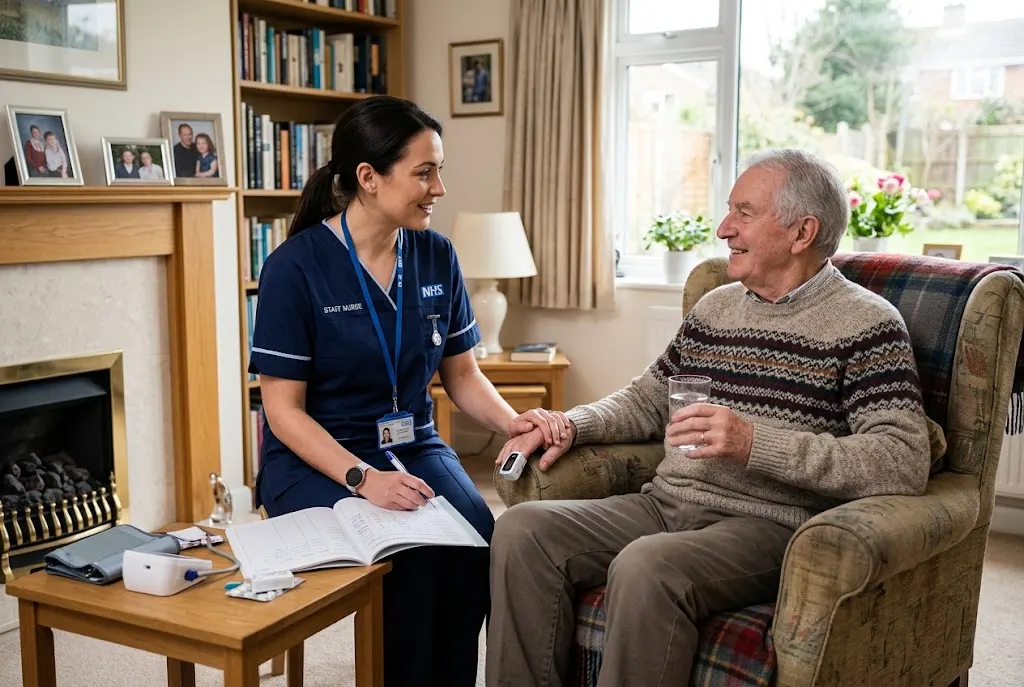

Nursing care at home provides professional healthcare support to people who need clinical assistance while continuing to live in familiar surroundings. Depending on an individual’s needs, this may involve regular nurse visits, ongoing monitoring, support following treatment, or more complex care that would otherwise be difficult to manage without professional help.
For individuals and families considering home-based care, understanding what nursing involves can make the decision easier. Nursing support is different from routine personal care because it involves healthcare needs that require appropriate clinical knowledge, assessment and professional judgement.
What Is Nursing Care at Home?
Nursing care at home means receiving nursing support within your own home rather than travelling to a hospital, clinic or residential setting for every aspect of care. The exact service depends on the person’s health needs and the care plan established by the relevant professionals.
Some people require short-term nursing support after an illness, procedure or hospital stay. Others may have long-term conditions or disabilities that mean they need continuing clinical assistance.
The NHS explains that community nursing services can provide care for people in their own homes when they have needs that require nursing support. Depending on local arrangements and individual circumstances, community nurses may help with treatment, wound care and other healthcare needs.
When Might Nursing Care at Home Be Needed?
There are many circumstances in which home nursing may be considered. The decision should always be based on the person’s individual healthcare requirements rather than simply their age or diagnosis.
Nursing support at home may be relevant for people who:
- Need professional monitoring of a health condition
- Are recovering following an operation or hospital admission
- Require wound care or other clinical treatment
- Have complex or long-term healthcare needs
- Live with a physical disability requiring ongoing support
- Need assistance managing certain aspects of their treatment
- Are receiving end-of-life or palliative care
In some situations, nursing can work alongside personal care and companionship. Someone may therefore receive different forms of support during the same period, with each service addressing a different part of their needs.
What Can Nursing Care at Home Include?
The services provided by a nurse depend on their professional role, the person’s condition and the care plan. Nursing should never be treated as a generic checklist because clinical requirements can vary significantly between individuals.
Depending on the circumstances, nursing care at home may include support with areas such as:
- Monitoring a person’s health and wellbeing
- Wound and dressing care
- Supporting prescribed treatment plans
- Managing certain clinical care needs
- Observing changes in a person’s condition
- Supporting recovery following illness or treatment
- Communicating relevant changes with healthcare professionals
- Providing guidance to individuals and families about agreed care routines
The nurse’s responsibilities should be clearly established as part of the care arrangement. Where a person’s condition changes, their support requirements may also need to be reviewed.
Private Nursing Care at Home
Private nursing care at home is an option for people who arrange nursing support outside NHS community services. Depending on the provider and the individual’s requirements, private nursing can offer scheduled visits or a more comprehensive package of support.
Families considering private nursing should first establish exactly what clinical support is required. It is also important to understand who will provide the care, how the service is supervised and how changes in health needs will be managed.
Cost is another practical consideration. Private care fees can vary according to the type of nursing required, the frequency and duration of visits, the complexity of care and the provider’s arrangements.
Nurse in the Home: How Home Visits Work
Having a nurse in the home can reduce the need for some people to travel regularly for appropriate aspects of their care. Instead, the nurse visits the person’s home according to the agreed care plan.
Home nurse visits can be particularly useful where travelling is difficult because of reduced mobility, recovery needs or a long-term condition. A home environment can also allow care to be considered in the context of the person’s everyday routine.
However, home nursing is not designed to replace emergency medical treatment. If someone experiences a serious or sudden medical emergency, they should seek urgent medical assistance through the appropriate NHS emergency service.
In-Home Nursing Care and Personal Care: What’s the Difference?
It is easy to confuse nursing with personal care because both can be delivered in someone’s home. However, they serve different purposes.
Personal care generally involves assistance with everyday activities such as washing, dressing, using the toilet and maintaining daily routines. Nursing, on the other hand, focuses on healthcare needs that require nursing expertise.
For example, an individual might need a carer to help them get dressed in the morning while also requiring a nurse to manage a clinical aspect of their care. These services can complement one another rather than being competing alternatives.
If you are initially looking for help with everyday routines rather than clinical care, our guide to personal care at home explains what this type of support can involve.
Private Nursing at Home for Long-Term Needs
Some people need nursing support for a relatively short period, while others require continuing assistance. Long-term private nursing at home may be considered when an individual has complex needs that require consistent professional involvement.
This can be particularly important when a person’s condition affects several areas of daily life. A suitable care plan should identify the tasks that require nursing expertise and distinguish them from activities that can be supported by a trained home carer.
Consistency can also matter. Where possible, having a familiar care team may help the person and their family understand routines and communicate changes more effectively.
Nursing Support for Spinal Conditions
People living with spinal injuries or conditions may have particularly complex support requirements. Depending on the individual’s circumstances, spinal home care services may combine nursing, personal care, rehabilitation-related support and assistance with daily activities.
Spinal homecare should be tailored carefully because the needs associated with a spinal condition can differ considerably between individuals. Some people may require help with mobility and personal routines, while others may need more complex clinical support.
When exploring spinal home care, families should look for a provider that can demonstrate an appropriate understanding of the person’s care requirements and coordinate effectively with relevant healthcare professionals.
Benefits of Nursing Care at Home
For suitable individuals, receiving nursing support at home can offer several practical benefits.
Familiar surroundings
Care takes place in an environment the person already knows. This can make daily routines feel more familiar and may be especially valuable for people who find frequent travel difficult.
Personalised support
Home-based care can be structured around the person’s individual circumstances, routines and agreed clinical requirements rather than following a general residential schedule.
Support for families
Professional nursing can provide families with additional support when healthcare needs become difficult to manage alone. It does not remove the importance of family involvement, but it can reduce the pressure of trying to provide professional clinical care without appropriate expertise.
Continuity of care
A properly organised homecare arrangement can help coordinate ongoing support and identify changes that may require further professional review.
How to Choose a Nursing Care Provider
Choosing a provider requires more than comparing prices. The first priority should be whether the provider can safely meet the person’s specific care requirements.
Before making a decision, consider asking:
- What nursing services does the provider offer?
- Are the relevant staff appropriately qualified and trained?
- How is the care plan created and reviewed?
- How are changes in the person’s condition communicated?
- Will the person have a consistent care team where possible?
- What happens if a scheduled nurse is unavailable?
- What are the costs and what is included?
- How does the provider coordinate with other healthcare professionals?
In England, it is also sensible to check the provider’s regulatory position where applicable. The Care Quality Commission provides information about registered health and social care providers in England, including inspection and rating information where available.
Can Nursing and Specialist Home Care Work Together?
Yes. A person with complex needs may require several types of support rather than one service covering everything.
For example, nursing may address clinical requirements while personal care supports washing, dressing and other everyday activities. Companionship can provide social interaction and help someone maintain a meaningful daily routine.
People with particularly complex circumstances may also benefit from exploring specialist home care services, particularly when standard homecare arrangements do not fully reflect their needs.
For people approaching the later stages of a serious illness, specialist support may also include palliative or end-of-life care. These services should be planned around the person’s wishes and clinical requirements.
Planning Nursing Care at Home
Good preparation can make the transition to home nursing smoother. Start by identifying the person’s current healthcare requirements and any support already being provided by NHS or other professionals.
It is also useful to consider the practical home environment. The care team may need information about mobility, access, equipment, medication arrangements and other factors relevant to safe care.
Care needs should not be viewed as permanently fixed. As a person’s condition improves, deteriorates or changes, their care plan may need to be adjusted accordingly.
Final Thoughts on Nursing Care at Home
Nursing care at home can provide professional healthcare support while allowing suitable individuals to remain in familiar surroundings. From short-term recovery support to ongoing care for complex conditions, the right arrangement should be based on individual clinical needs.
Private nursing, home nurse visits and specialist services can all form part of a broader homecare plan. The important distinction is that nursing addresses healthcare needs requiring appropriate professional expertise, while personal care focuses primarily on everyday activities.
Before choosing a provider, consider the person’s current needs, the level of clinical support required, the qualifications of the care team and how the service will adapt if circumstances change. A carefully planned approach can help create safer, more coordinated and more personalised support at home.