
For many drivers, the hardest part of car maintenance is not the bill but the logistics: booking the car in, getting to the garage, and managing without it for a day. A mobile auto service removes that friction by bringing the mechanic to you. A qualified technician arrives at your home or workplace with the tools and parts needed, carries out servicing or repairs on the spot, and hands back your keys without you leaving the house. This guide explains how mobile mechanics work, what they can realistically do on a driveway, and when a traditional garage is still the better choice.
What a Mobile Auto Service Actually Is
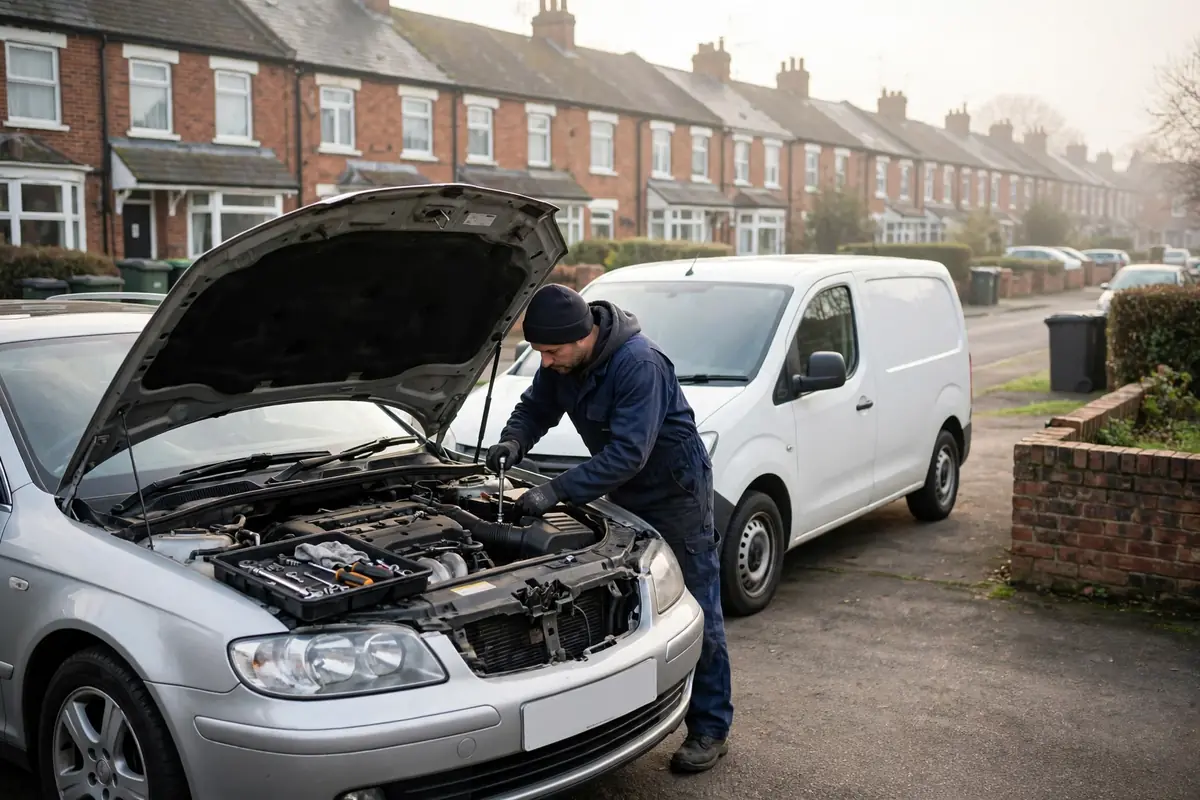
A mobile mechanic is a fully equipped technician who works from a van rather than a fixed workshop. The van carries diagnostic equipment, jacks and axle stands, battery testers, and the oils, filters and common parts needed for routine work. Most mobile operators are experienced mechanics who have chosen to work independently, and many are former main-dealer or fast-fit technicians.
The service model is simple: you book a date and location, describe the car and the work needed, and receive a quote in advance. On the day, the mechanic works where the car is parked, provided there is safe, reasonably level ground and enough room to work around the vehicle. Compared with booking into a workshop, as described in our guide to car servicing, the difference is purely where the work happens, not the standard it should meet.
Jobs a Mobile Mechanic Can Do at Your Door
Routine servicing is the core of mobile work. Interim and full services, oil and filter changes, air and pollen filters, and spark plugs can all be handled on a driveway. Brake pads and discs are another common mobile job, because they need no specialist machinery beyond safe lifting equipment. Battery testing and replacement, starter motors, alternators, and many sensor and electrical faults diagnosed with portable scanners are also well within reach.
Pre-purchase and pre-MOT inspections are popular too: a mechanic can examine a car you are thinking of buying, or check yours over before its test. Seasonal health checks, covering tyres, lights, fluids and wipers, round out the typical list. Our overview of auto maintenance services explains what these checks involve and why they matter.
Because the mechanic travels light, jobs are usually confirmed in advance so the right parts arrive with them. If an inspection reveals extra work, a good operator will show you the worn part, explain the options, and quote before proceeding rather than surprising you afterwards.
What a Mobile Mechanic Cannot Do
Some work genuinely needs a workshop. Anything requiring a vehicle lift for extended periods, a four-wheel alignment rig, or specialist transmission and engine-rebuild equipment belongs in a garage. Large jobs that leave a car immobile for days are also impractical on a driveway, both for you and for neighbours.
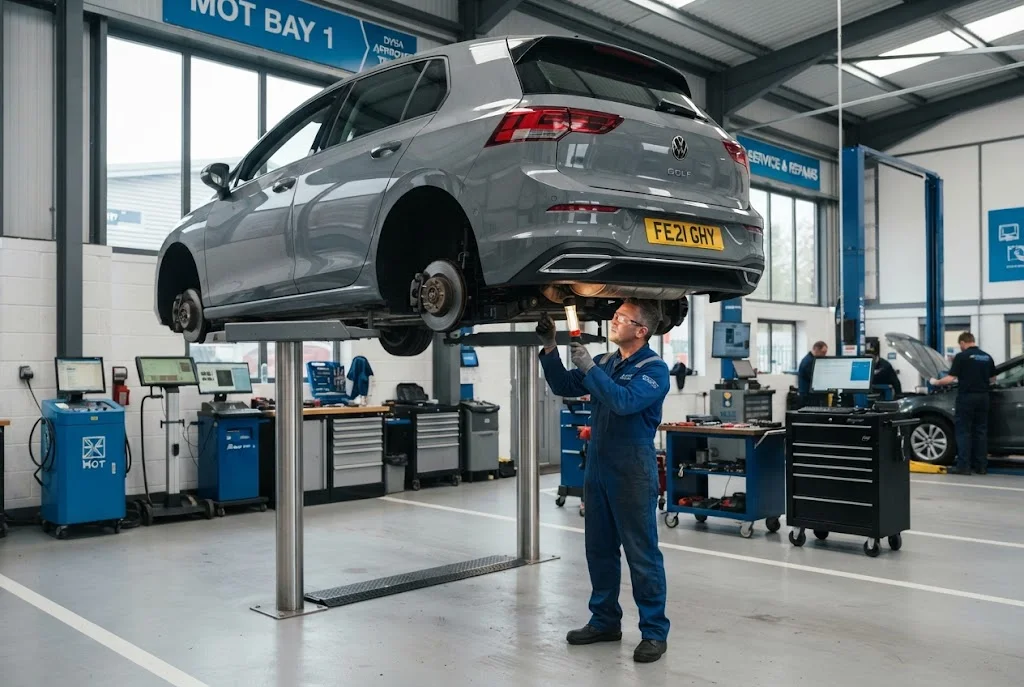
The MOT is the clearest example. By law, the MOT test itself can only be carried out at an authorised testing station with approved equipment, so no mobile mechanic can test your car at home. What they can do is prepare the car beforehand and fix many common failure items. Our MOT and service guide explains how the test and routine servicing fit together.
Weather and workspace are honest limitations as well. Heavy rain, a steep slope or a cramped parking bay can make safe work impossible, and a reputable mechanic will rearrange rather than cut corners.
Mobile Servicing vs a Traditional Garage
The obvious advantage of mobile servicing is time. There is no journey to the garage, no courtesy-car lottery and no day spent arranging lifts. If you work from home or have caring responsibilities, the car can be serviced while your day continues almost untouched. Pricing is often competitive too, because a mobile operator has no workshop rent or ramp costs to recover, though prices vary and you should always compare like for like.
Garages still win in some situations. A workshop can put several technicians on a big job, keep parts on the shelf, and escalate to specialist equipment when a fault turns out to be deeper than expected. For complex diagnostics, warranty work tied to a dealer network, or anything structural, the fixed site is the safer bet.
Whichever route you choose, the maintenance itself should follow the manufacturer’s schedule. Our guide to vehicle maintenance sets out what needs doing and when, and that schedule applies equally whether the spanners are in a workshop or on your drive.
How to Choose a Mobile Mechanic You Can Trust
Start with evidence. Look for reviews that mention punctuality, cleanliness and clear pricing, and check whether the business is registered and insured. Ask about qualifications and experience with your make of car, and confirm that the quote includes parts, fluids and disposal of old oil and filters.
Ask, too, how the work is recorded. A proper invoice and a stamp or digital entry in your service history keep the car’s records complete, and as our guide to checking a car’s service history explains, that documentation protects resale value. Be wary of anyone unwilling to put the work in writing.
Finally, clarify the guarantee. Reputable mobile mechanics warranty their labour and fit parts with their own guarantees, and they will explain what happens if a repaired fault returns. A short conversation about the worst case tells you a great deal about the business.
When Mobile Servicing Makes the Most Sense
Mobile servicing shines for routine maintenance on cars that are used daily and cannot easily be spared, for households juggling work and family logistics, and for drivers in rural areas where the nearest trusted garage is a long round trip. It is also an excellent fit for second cars, classic cars that are kept off the road, and vehicles that have failed to start where they sit.
It complements, rather than replaces, the rest of your maintenance planning. Some drivers pair mobile servicing with prepaid cover for workshop work; our look at whether car service plans are worth it explains how that cover works and who it suits.
In short, a mobile auto service offers genuine convenience without asking you to accept a lower standard of work. Choose a qualified, well-reviewed mechanic, be clear about the job in advance, and you get the rare thing every driver wants: a properly maintained car and a day that was never interrupted.